

3S is the abbreviation for “Seiwa Scholars Society,” which consists of the past and current Inamori Research Grant recipients. The 3S has evolved since 1997 with the hope that the interactions among the various specialties of the 3S members can lead to the further development of the research of their own. In the series “Visiting 3S Researchers,” we interview researchers in 3S who are very active in a variety of fields. The 17th interview is with Dr. Hikaru Yabuta (2011 Inamori Research Grants Recipient) from Hiroshima University.

How Did Life Begin? Tracing the Origins of Earth and the Solar System Through Chemistry
As we ask how life first emerged, our questions naturally expand: How did Earth form? And before that, how did our Solar System come into existence? Astrobiology is an interdisciplinary field that seeks answers to these questions by integrating chemistry, astronomy, biology, geology, and many other scientific disciplines.
For this installment of the “Visiting 3S Researchers” series, we visited Dr. Hikaru Yabuta of Hiroshima University, whose research uses advanced chemical analysis to explore these profound mysteries. We spoke with her about the scientific journey behind one of humanity’s oldest questions.
Chemistry Can Reveal Events That Happened Before Earth Was Formed
── What is Astrobiology?
Dr. Yabuta (title omitted below) Astrobiology is commonly defined as the interdisciplinary study on the origin, evolution, distribution, and future of life in the universe. Another way to discipline it is that it seeks to answer one of humanity’s most fundamental questions: Where did we come from, and where are we going?
The question of “where we came from” refers to the origin of life. To understand how life emerged, survived, and evolved on Earth and potentially on other planetary bodies, we need insights not only from biology but also from chemistry, physics, astronomy, and geosciences. No single discipline can fully answer such profound questions on its own. Astrobiology therefore integrates expertise across many fields into a unified scientific approach. The discipline emerged at NASA around the year 2000 in response to this need for interdisciplinary research.
── Does “where we are going” refer to the future?
Yabuta Exactly. If we understand how life originated on Earth and what kind of environments allowed it to persist and evolve, we can assess whether similar forms of life might exist on other worlds with comparable environments. It may also help us better understand the future of life on our own planet. In that sense, Astrobiology explores the past, present, and future of life–its origins, evolution, and possible distribution throughout the universe.
When I was an undergraduate, the term Astrobiology hadn’t yet become widely used. At the time, I was studying chemistry at the University of Tsukuba with the intention of becoming a chemistry teacher. One of the professors taught a course called Cosmochemistry. It sounded quite unusual, and I was immediately intrigued. That professor was Dr. Akira Shimoyama, who later became my doctoral supervisor.
Through Professor Shimoyama’s lectures, I learned that chemistry could be used to investigate the universe. I found the idea fascinating, and when it came time to choose a laboratory for my undergraduate research, I joined his cosmochemistry group.

── Was that when you began to analyze meteorites?
Yabuta Actually, no. Meteorites were considered too valuable to entrust to undergraduate students who were still learning experimental techniques. Professor Shimoyama believed we first needed to master analytical techniques using terrestrial rocks before working with such precious samples. As a student, I studied ancient sedimentary rocks on Earth—for example, rocks deposited during the time of the dinosaur extinction or in ancient oil-generation environments. By analyzing the organic compounds preserved in these rocks, I learned how to reconstruct Earth’s geological history using chemical evidence.
After completing my Ph.D., I spent four years in the United States, where I began working in earnest on extraterrestrial organic matter. I analyzed a wide variety of meteorites and investigated what differences in the elemental, molecular, and isotopic compositions of organic matter reveal about their chemical evolution. These chemical variations record the distinct processes that each meteorite experienced during history of the Solar System, or indicate that they are derived from different origins.
I was also fortunate to have the opportunity to analyze cometary dust returned by NASA’s spacecraft. Because the cometary dust particles are extremely small, conventional analytical techniques for sedimentary rocks and meteorites were no longer sufficient. Instead, I learned to use synchrotron-based X-ray microscopy, which combines highly brilliant synchrotron X-rays with advanced microscopy to characterize organic matter from micrometer down to nanometer scale. Mastering these cutting-edge techniques opened up entirely new possibilities for studying extraterrestrial materials.
What Can We Learn from Meteorites and Cometary Dust?
── Do meteorites and cometary dust provide different kinds of information?
Yabuta Meteorites are fragments of asteroids that have fallen to Earth. Most asteroids reside in the inner Solar System, whereas comets are primarily found in the outer region of the Solar System. As a result, their compositions are quite different.
Volatile substances such as ice and gases have been largely lost from meteorites, but they are still preserved in comets. Comets also retain materials that record the earliest stages of Solar System formation. By studying both comets and asteroids (meteorites), we can more comprehensively reconstruct the history of the building blocks of the Solar System.
When we analyzed cometary dust, we found chemical compositions that were not seen in meteorites. Organic matter in cometary dust contains larger abundances of nitrogen and oxygen and exhibits greater diversity in elemental compositions. On the other hand, meteorites are relatively enriched in carbon and hydrogen. In simple terms, the organic matter in meteorites may represent a more chemically processes or “matured” form of the organic matter originally present in comets.

── Does this discovery have any implications for the origin of life?
Yabuta One of the most widely accepted hypotheses for the origin of life proposes that, during the early history of Earth, large numbers of asteroids and comets delivered amino acids, sugars, nucleobases, and other organic molecules to our planet. These compounds then underwent further chemical evolution on Earth, eventually leading to life. It is an appealing and easy-to-understand scenario. However, I sometimes feel that it highlights only the most convenient part of the story.
Asteroids and comets contain far more than biologically relevant molecules such as amino acids, sugars, and nucleobases. In fact, the overwhelming majority of extraterrestrial organic matter consists of molecules that have no direct biological function. Among them are black, carbon-rich solid organic materials with highly complex molecular structures. We now know that these macromolecular organic materials are both abundant and ubiquitous throughout the universe. I believe that these complex carbonaceous solids deserve much more attention. They may have served as the primary source of carbon for the Earth, as the long-term source of carbon dioxide (CO₂) that has continued to keep our planet warm for more than 4 billion years, and ultimately as the precursor from which the organic matter of living organisms evolved. This is not an idea that can be explained in just a few sentences, so it is sometimes difficult to communicate to audiences outside my field. Nevertheless, I believe it represents an important perspective for understanding the origin of life.
── Do you think we will find extraterrestrial life beyond Earth within our lifetime?
Yabuta Research aimed at understanding the conditions of environments that can support life is advancing steadily. If future exploration missions continue to improve and we can identify the most promising locations to investigate, I think it would not be surprising if we were to find evidence—or at least traces—of life beyond Earth.
── So, you expect that what we find will most likely be traces of life rather than living organisms themselves?
Yabuta One of the biggest challenges in the search for extraterrestrial life is that we still do not have a universally accepted definition of what life actually is. It is entirely possible that we may discover something on another planetary body that is fundamentally different from life on Earth, forcing us to rethink the very definition of life itself. That possibility is one of the most exciting aspects of astrobiology, and it is something many of us hope to witness.

Leading the Hayabusa2 Organic Macromolecule Team
── You served as the leader of the Organic Macromolecule Team within the Initial Analysis Team for samples returned from asteroid Ryugu by Hayabusa2. As the leader, what did you consider most important?
Yabuta My first priority was to build trust and create a sense of unity within the team. Hayabusa2 was an international collaborative project involving researchers from around the world. Some were internationally renowned scientists and had longer careers than I had. I felt a strong responsibility to demonstrate that I could earn their confidence as the team leader.
Another challenge was bringing together researchers working in closely related fields. Naturally, some shared similar scientific perspectives, while others had long been regarded as competitors. As a leader, I believed that it was important to foster an environment in which even scientific rivals could work together constructively toward a common goal. Communication was therefore key. We held frequent online meetings to get to know one another, discuss our plans, and establish mutual trust, even before the project officially began.

── Was it challenging to handle such precious samples?
Yabuta Very much so. Hayabusa2 returned a total of 5.4 grams of samples from Ryugu. However, those samples were never intended to be consumed entirely by the initial analysis teams. Most of the samples were later distributed through competitive research proposals or preserved for future generations of researchers. Of the approximately 100 milligrams allocated for the Hayabusa2 Initial Analysis Team, only a few milligrams were assigned to our Organic Macromolecule team. One of my most important responsibilities as team leader was to receive those precious samples and distribute them to more than 40 members of the Organic Macromolecule Team while maintaining conditions that minimized contamination.
Much of my time was spent in a clean room, looking through a microscope and carefully picking up individual asteroid particles one by one. Each particle had to be transferred from one container to another with extreme precision. Losing even a single grain or introducing contamination was simply not an option. It was an extraordinarily demanding task that required complete concentration. Once the samples had been prepared, I personally hand-carried them to collaborators throughout Japan whenever possible. Samples for international collaborators were shipped by international courier. We took the utmost care in packaging to ensure the samples would not be damaged or subjected to excessive vibration during transport. Managing the distribution of these irreplaceable samples remained one of my primary responsibilities for nearly an entire year.

── How was the analysis carried out?
Yabuta Before the analyses began, we developed a detailed plan for the entire project—who would conduct which analyses, in what order, and according to what schedule. We started with analytical techniques that caused little or no damage to the precious samples. Only after those non-destructive measurements were completed, we moved on to analyses that required dissolving or extracting the samples. We held online meetings about every two weeks, where members shared their latest results and progress. Every meeting brought new discoveries – findings that none of us had ever seen before. It was truly exciting. Equally inspiring was witnessing so many researchers, each with different expertise, working together toward a single scientific goal. Being part of that collaborative process was one of the most rewarding aspects of the project.

── What did you learn from analyzing Ryugu?
Yabuta Based on ground-based observations, Ryugu had already been classified as a C-type asteroid, one of the major types of asteroids in the Solar System. Because C-type asteroids are thought to preserve primitive materials in the early Solar System, they have long been regarded as key targets for understanding how the Solar System evolved.
When we analyzed the returned samples, we found that both their chemical compositions and mineralogy closely resemble those of extremely rare CI carbonaceous chondrites, a class of meteorites that has long been considered among the most primitive materials available on Earth. More than 10,000 meteorites have been recovered on Earth, yet fewer than 10 are classified as CI carbonaceous chondrites. Until now, our understanding of the Solar System had relied largely on meteorites that happened to survive their journey through Earth’s atmosphere. The Ryugu samples helped explain why CI-like materials are so rare: although C-type asteroids are abundant in the Solar System, they are mechanically fragile and are often destroyed before reaching Earth’s surface.
── So, this is something that could only have been learned through a sample return mission?
Yabuta Exactly. The Ryugu particles contain clay minerals and carbonates, which indicate that liquid water once existed within Ryugu’s parent body. We also identified water trapped inside minerals themselves. We also discovered that organic matter with isotopic compositions unlike those found on Earth was intimately associated with the clay minerals and carbonates. These observations suggest that organic matter originally formed in the extremely cold environment of space at temperatures below −200°C was incorporated into Ryugu’s parent body, where it later reacted with liquid water during aqueous alteration to form Ryugu’s organic matter.
Interestingly, the surface of Ryugu is dehydrated. From remote observations by the spacecraft alone, it would have been impossible to recognize that the asteroid’s parent body once contained abundant water.
The returned samples also allowed us, for the first time, to compare fresh asteroid materials that collected in space and returned to Earth. This comparison demonstrated that meteorites have undergone terrestrial weathering, resulting in part of their original chemical compositions to be altered. In this respect, sample return missions are essential for understanding the original composition of planetary materials. I believe that future missions returning samples from many different types of Solar System bodies will continue to deepen our understanding through comparisons with meteorites studied here on Earth.

── I imagine some results are yet to be published. What would you like to take on next—what you might call “an ambition” for the future?
Yabuta Well, I wouldn’t call it an ambition, but if I may express a rather simple hope, I’d like to serve as the Project Scientist for a future planetary exploration mission. What attracts me is not only the science itself, but also the opportunity to oversee the mission as a whole—from sample analysis to observations and spacecraft operations—and to help the entire team perform at its best by viewing the project from a broad scientific perspective.
As a Project Scientist, you take on the responsibility from the very beginning for determining the mission’s scientific objectives, including deciding which planetary body should be explored and what new discoveries the mission aims to achieve. Of course, Ryugu was an extraordinarily fascinating target. However, I have a stronger interest in comets and other icy bodies.
While I was in the US, I analyzed dust collected from a comet. While those samples provided valuable scientific information, it was difficult to relate the composition of the dust directly to the comet’s geology and surface features, making it challenging to fully reconstruct the comet’s formation and evolution. There is also a technical limitation: the high velocity collection process itself may have altered the original composition of cometary dust.
If I had the opportunity, I would love to collect and analyze a pristine piece of a comet directly. That is my personal dream. I’m sure many researchers around the world share the same dream (Laughs). Planetary exploration missions take decades—from conception and launch to the return of samples—and whether such a mission coincides with my own scientific career depends, to some extent, on a good fortune. Still, I sincerely hope that one day I will have the opportunity to make it happen.

| This Book | 
Night on the Galactic Railroad by Kenji Miyazawa, IWANAMI SHOTEN Dr. Yabuta notes that the works of Kenji Miyazawa, who was also a scientist, are rich in scientific references. |
|---|---|
| Unchosen Path | 
“I probably would have become a junior high or high school chemistry teacher.” As a high school student, Dr. Yabuta originally planned to become a chemistry teacher. “I was fortunate to have many dedicated teachers, including my high school chemistry teacher, who had a profound influence on me. I admired their passion for education, and I hoped that one day I could inspire the next generation in the same way. I enjoy teaching and doing research together with my students. Of course, every generation of students is different, and I sometimes find myself thinking about the best ways to communicate with them.” |
Hikaru Yabuta
Professor, Graduate School of Advanced Science and Engineering, Hiroshima University. She received her Ph.D. in Science from the University of Tsukuba, where she studied chemistry.
She subsequently held research positions at the Graduate University for Advanced Studies (SOKENDAI) and the National Institute of Advanced Industrial Science and Technology (AIST), and was a JSPS Postdoctoral Fellow at Tokyo Metropolitan University and Arizona State University. She then conducted postdoctoral research at the Carnegie Institution for Science. She later served as Assistant Professor at the Graduate School of Science, Osaka University, before joining Hiroshima University as Associate Professor in 2017. She was promoted to Professor in 2019 and has held her current position since 2020.
For the Hayabusa2 asteroid sample-return mission, she served as leader of the Landing Site Selection Working Team, coordinator of the Multi-scale Asteroid Science Group, and leader of the Organic Macromolecule Team for the initial analysis of samples returned from the asteroid Ryugu.
Interview and original article: Izumi Kanchiku (team Pascal)
Photo: Sayuri Yoshioka
-
 Research Grants
Visiting 3S Researchers #18 Dr. Michihiro SugaCapturing Transient Conformational Changes in Proteins to Unravel the Mysteries of Life —Unveiling the Unseen Intermediate States of Photosynthetic Reaction—
-
 Research Grants
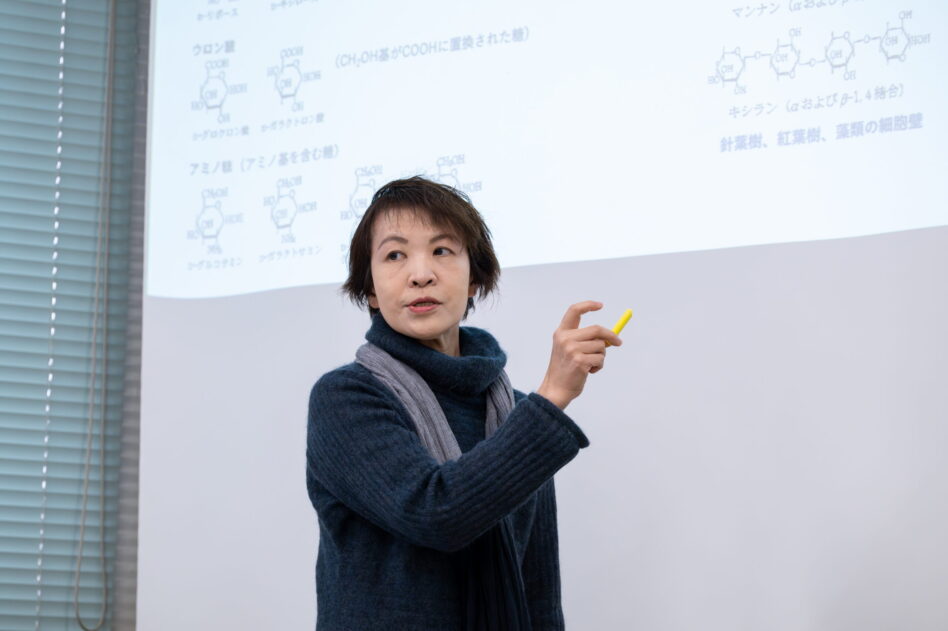
Visiting 3S Researchers #17 Dr. Hikaru YabutaExploring the Origins of Life, Earth, and the Solar System through Chemical Analysis of Extraterrestrial Organic Matter —Insights from Asteroid Ryugu Samples Returned by the Hayabusa2 Mission—
-
 Research Grants
Visiting 3S Researchers #16 Dr. Taisei ShidaRestoring the Thoughts of Ancient Indian Philosophers from Texts —Identifying Errors in Palm Leaf Manuscripts—
-
 Research Grants
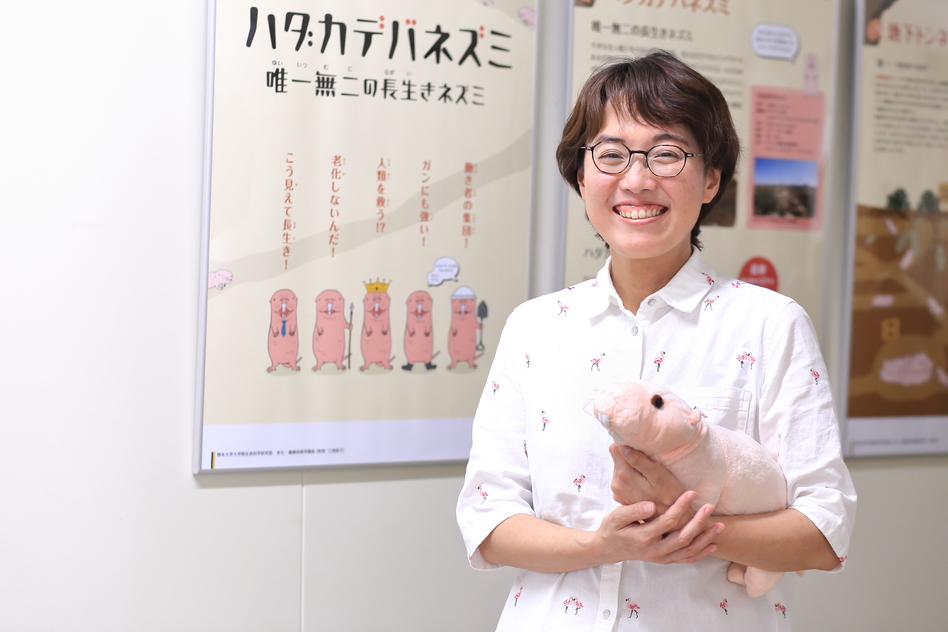
Visiting 3S Researchers #15 Dr. Kyoko MiuraDecoding the Secrets of Long-Lived, Cancer-Resistant Rats to Advance Medical Research —Pioneering the Development of Novel Model Animals—
-
 Research Grants
Visiting 3S Researchers #14 Dr. Megumi Sasaki Practice and Research in Safeguarding College Students’ Mental Health ─Searching for Clues to Reduce Procrastination─
-
 InformationResearch Grants
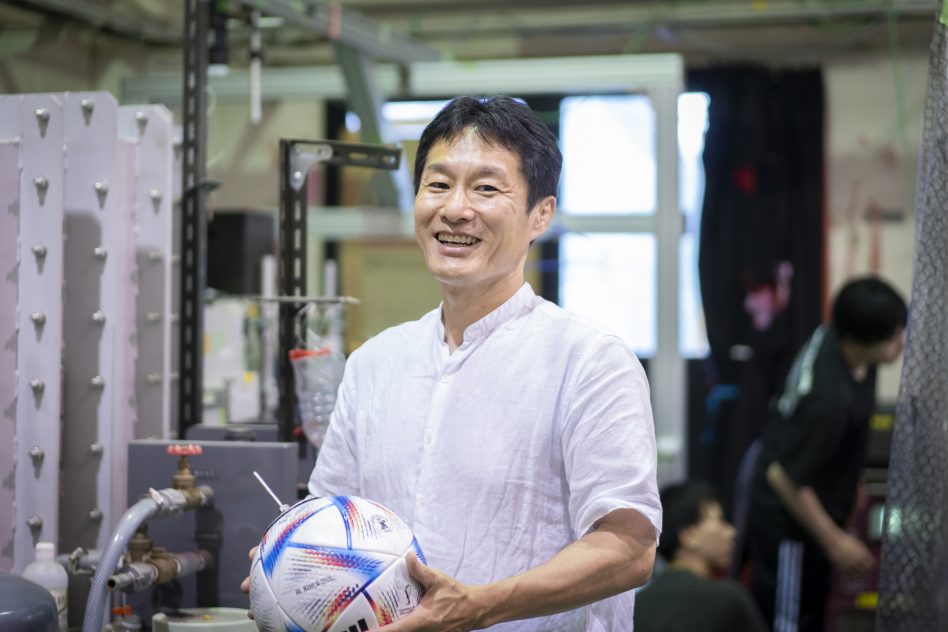
Visiting 3S Researchers #13 Dr. Kazuya SeoWhat Sports Engineering Can Do to Enhance the Appeal of Sports Events