
3S is the abbreviation for “Seiwa Scholars Society,” which consists of the past and current Inamori Research Grant recipients. The 3S has evolved since 1997 with the hope that the interactions among the various specialties of the 3S members can lead to the further development of the research of their own. In the series “Visiting 3S Researchers,” we interview researchers in 3S who are very active in a variety of fields. The 16th interview is with Dr. Taisei Shida (2016 Inamori Research Grants Recipient) from the University of Tsukuba.

Beginning more than 2,000 years ago, a wealth of religions and philosophies emerged in what is now India and its surrounding regions, serving as a foundational source of culture and thought across Asia. The profound reflections of ancient Indian thinkers—from the tenets of Buddhism and Hinduism to debates in logic and metaphysics—continue to shape the modern world. We know these ideas primarily through manuscripts written in ancient languages. However, some versions no longer convey the original intent due to errors introduced through centuries of hand-copying. Dr. Taisei Shida of the University of Tsukuba undertakes the meticulous task of analyzing and comparing these manuscripts to identify and correct these discrepancies, working to restore authentic voices of ancient philosophers. We visited his office to learn about his research methods and the enduring appeal of Indian philosophy.
Unearthing Ideas from Layers of Texts
── Your research is in the fields of Indian philosophy and classical studies. Could you tell us exactly what that entails?
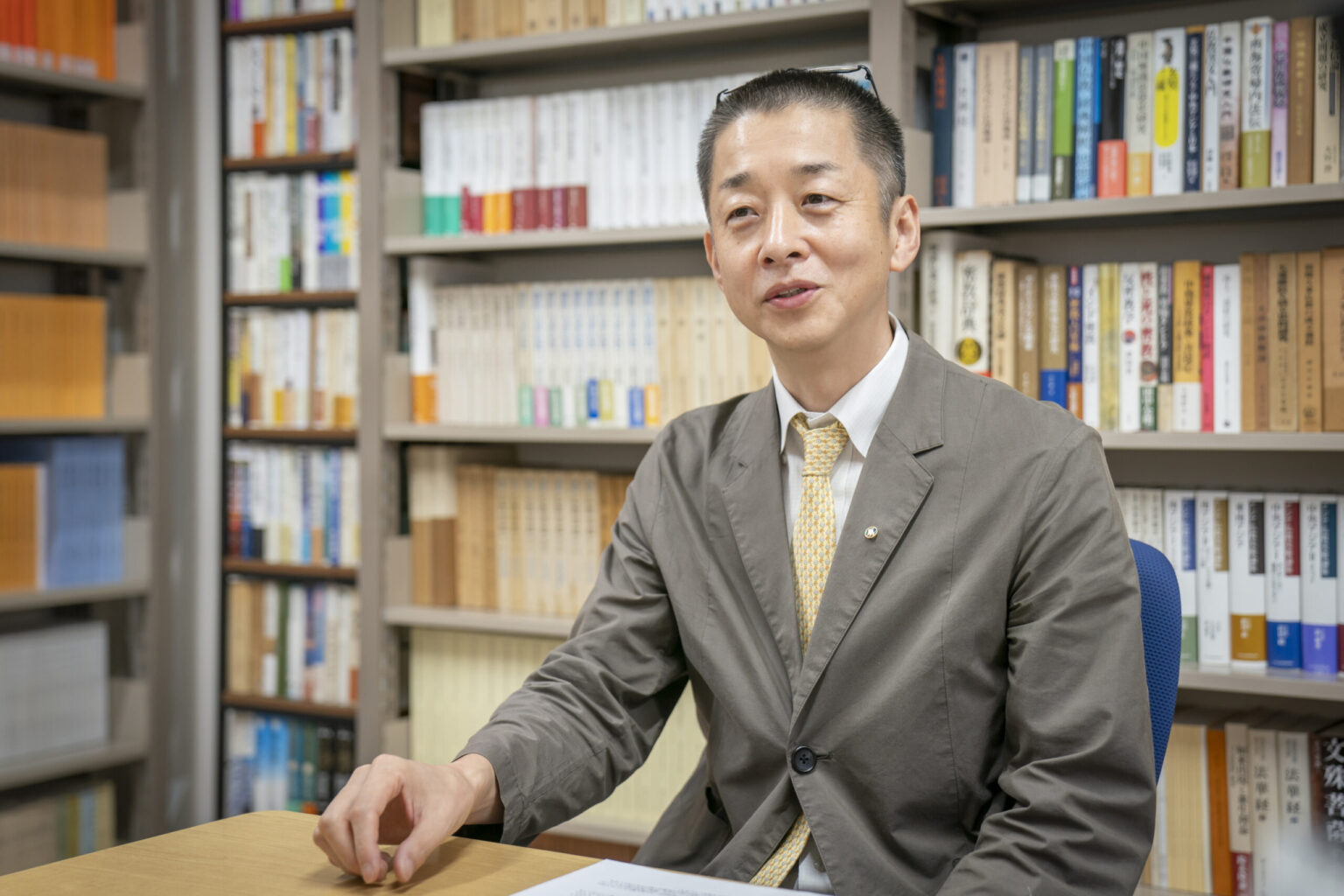
Dr. Shida (title omitted below) My work falls broadly under the field of philology. I study ancient texts written in Sanskrit*1 and analyze them with the goal of restoring them to a state as close to the original as possible. I strive to grasp precisely what ancient Indian thinkers intended to say, and to reconstruct––as plausibly as possible––the exact wording the authors would have written for future generations.
Before the invention and spread of the printing press, the only way to reproduce a text was to copy it out by hand. In this process, manuscripts were passed down much like a message in “a game of telephone.” Over time, the text would gradually degrade or be altered by the personal interpretations of the scribes, drifting away from the original. My research involves collating different versions of these manuscripts to resolve such discrepancies. I essentially work backward from these copies to recover the author’s original words. Once a text is restored, I also work on translating it into modern language.
── When I think of philosophy as a field of study, I imagine reading many books to explore one’s own thinking.
Shida In reality, it is difficult to reach the stage of developing one’s own ideas from ancient texts because there are simply so many works that must be edited first. One scholar of Indian philosophy remarked that while they imagined philosophical research to be like “flying freely through the sky in an airplane,” but the reality was closer to “picking up stones to clear a runway.” It is a good analogy. Most of the work is this kind of steady, painstaking labor. And yet, even “clearing a runway” turns out to be a genuinely intellectual and surprisingly enjoyable pursuit. Some also compare textual editing to restoring old works of art: without a deep knowledge of the colors and techniques of the period, restoration is impossible. The work of editing these texts is just as profound.
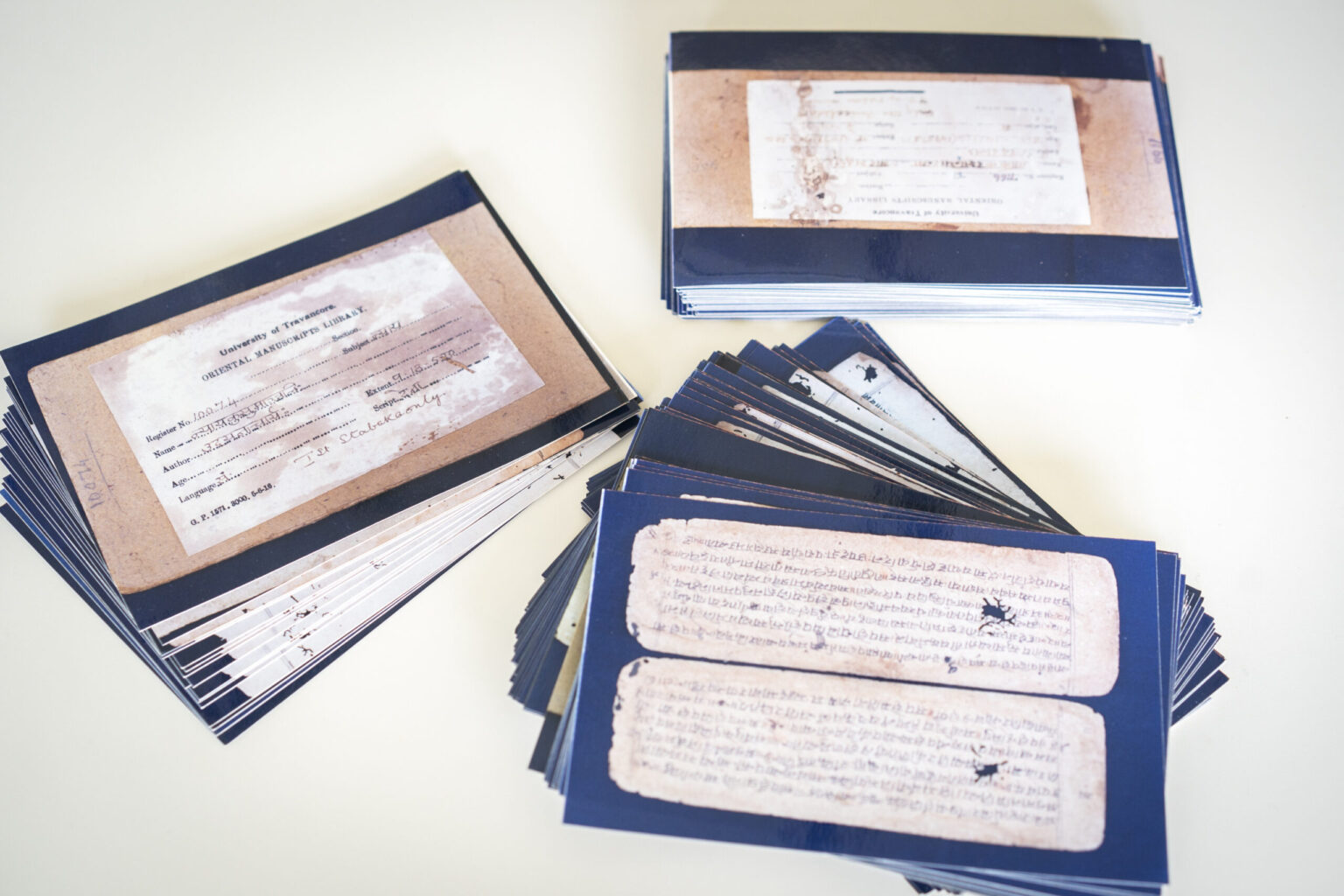
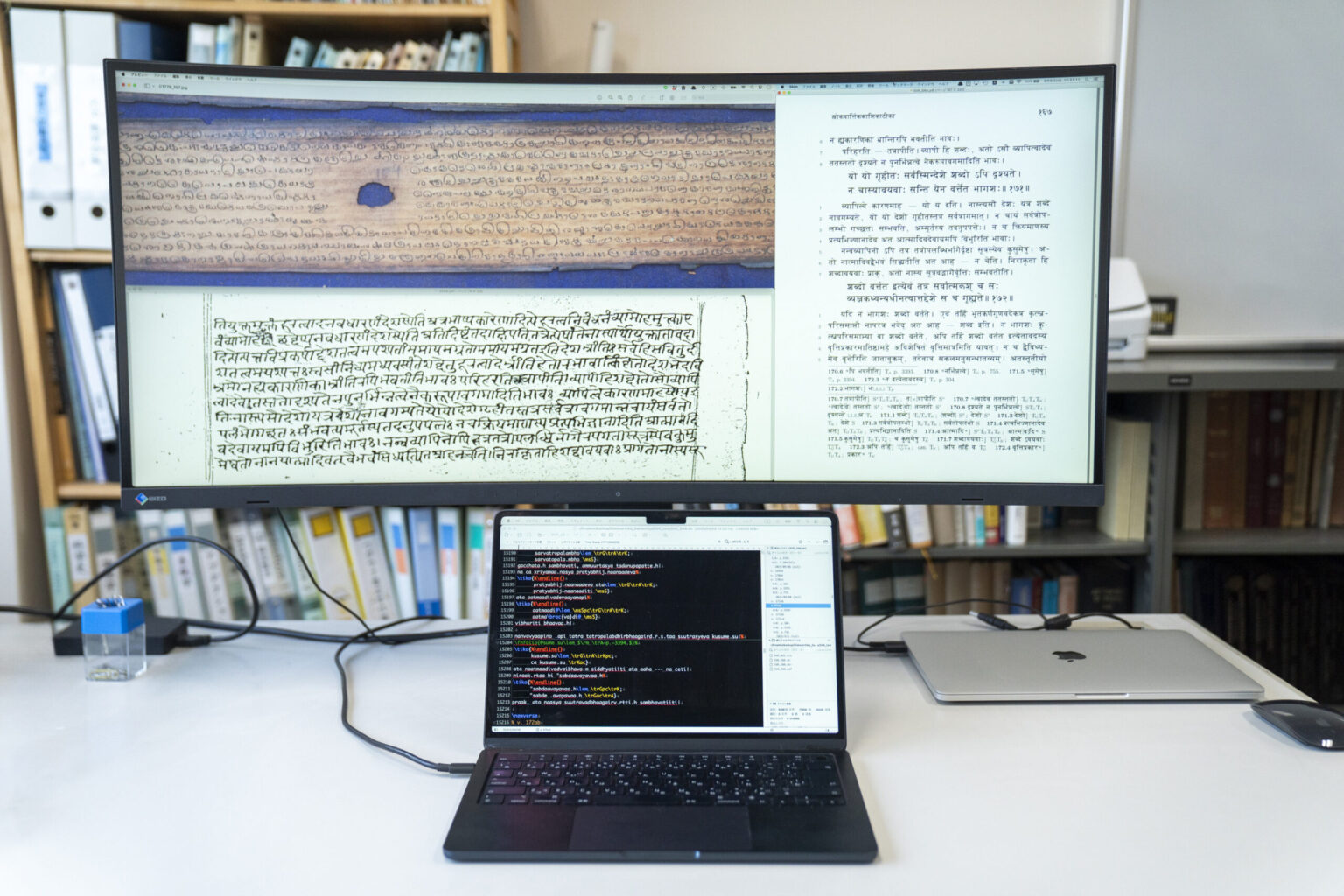
Manuscripts are mainly written on materials such as palm leaves. Since the originals cannot be taken out of local libraries, I work with digital images instead. I arrange several manuscripts side by side on my monitor and compare them carefully to identify any discrepancies, while striving to remain unbiased. These differences among manuscripts are known as “variant readings.”
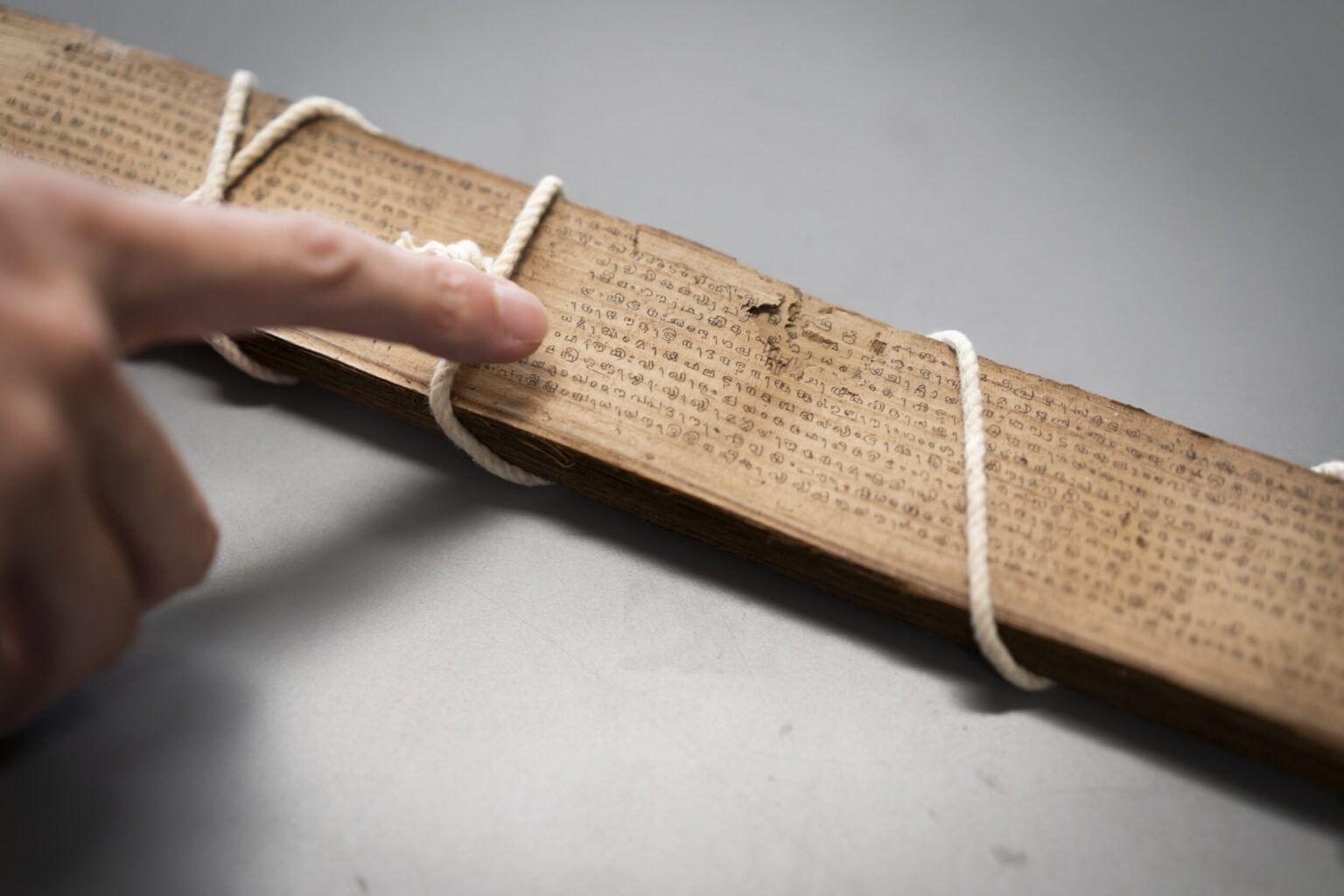
Every time I spot a variant, I record it. I do the same for any places where characters are missing, often because they have been eaten away by insects. I might go through a single manuscript more than 10 times. Even after a first pass, the work is never truly finished; when a variant appears in another manuscript, I return to the same passage to ensure I have not missed anything. Often, I discover new variants that didn’t catch my eye before, even in a manuscript I thought I had completed.
── Could AI eventually take over the editing work?
Shida With recent advances, computers can now automatically recognize characters with decent accuracy. However, the real challenge lies in understanding how a text evolved over time––how it arrived at its present form after being copied repeatedly across centuries. For now, making those judgments still requires the human eye, experience, and insight. I believe those skills remain difficult to replace, which makes me somewhat optimistic about the future of the field.
To give you one example: I submitted a paper to a major European journal back in 2018, and the peer review is still ongoing––or may not have even begun. In that paper, I propose correcting a “standard” reading of a text and explain my reasoning. I do not believe AI could do this kind of work yet. In this specific case, more than a dozen manuscripts all agreed on the same reading, and later commentaries supported it as well. Even so, I had a “hunch” that the original wording differed from what appeared in these later manuscripts. Since it was difficult to prove that directly, I looked back at even older texts, and built my argument through careful reasoning.
It is not easy to put into words why I felt the later manuscripts did not reflect the author’s original intent; perhaps it was more of an intuition. But the moment I thought, “This might not be right,” was incredibly exciting. From there, the real work began––building a logical case, piece by piece, was a demanding process.
A Millennium-Long Debate: Does the Truth of Knowledge Require Proof?
── How would you characterize Indian philosophy?
Shida In the introduction to History of Indian Philosophy, Dr. Erich Frauwallner––one of the pioneers of the field––identifies four major questions that shape Indian philosophy. The first concerns ontology, what he calls a “world picture,” which asks what kinds of things exist. The second is epistemology, or a “theory of knowledge,” exploring questions such as: “How do we know what we know?” and “How do we know that what we know is true?” The third is cosmology, described in terms of the “world edifice” and “world duration,” dealing with how the universe begins, persists, and ends. Finally, the fourth focuses on liberation, or the “doctrine of deliverance,” which examines how human suffering can be overcome and liberation attained.
I contributed the chapter on epistemology for a book I co-authored, Kaleidoscope of Indian Philosophy (Indo Tetsugaku no Mangekyo)*2 , published in May 2025. The chapter introduces debates on how knowledge is justified and how its validity can be established. For example: when you look at a desk and think, “There’s a desk,” how do we determine whether that belief is true? How can you be sure, and do you even need to make sure in the first place? Two rival schools of thought have debated these questions for over a thousand years.
While this may sound abstract, the question of how knowledge is justified is actually highly universal. It relates directly to how we evaluate and fact-check the information we encounter daily in the news or on social media. Indian classical polemicists often debated questions like whether the self before sleep is identical to the self upon waking, whether an object remains truly the same from one instant to the next, or whether the self and others are fundamentally distinct. All of these philosophical discussions, along with our everyday judgments, are broad, meta-level questions that are connected to how we determine the truth of what we know.
── Why did you specialize in Indian philosophy?
Shida The short answer is that I was not a very serious student at first. I started out in a science program, but I spent most of my time gaming in the club room, and my grades suffered. I was on the verge of having to repeat a year, and when it came time to choose a major, the competitive departments were no longer an option for me. Indian philosophy was not very competitive––essentially, anyone who applied could get in––so that is what I chose. However, once I entered the department, I met a lot of brilliant, inspiring senior students. The environment was full of energy and intellectual excitement, and that is when I began to realize how fascinating the field truly was.
Indian philosophy and Indian classical studies have a long scholarly tradition with well-established research methods. This means that when you begin, you must first learn methods that have been refined for about 200 years. To be honest, I did not even understand what I was doing at the beginning. Yet, while learning classical languages and doing the painstaking, “stone-picking” work of textual editing was demanding, I found it enjoyable at times. I think that sense of enjoyment is what has kept me going in my research all these years.
── Do you travel to India for fieldwork?
Shida When I was in the second year of my doctoral program, I spent about six months in South India. That was my first chance to visit a manuscript library that houses original manuscripts. Libraries in India work very differently from those in Japan. Submitting a request does not mean that materials will be provided right away. Sometimes the library is closed without notice; other times, you may be turned away with words like, “Tomorrow is a holiday, so we are closing today,” or “Come back tomorrow,” even if the doors are still open. I also had to navigate local customs, such as negotiating access by paying what staff called “coffee.” Through these repeated interactions, I was eventually able to view and photograph manuscripts. At my host research institute, I also learned computer-aided approaches to textual editing from leading European researchers. Looking back, those six months were extremely rewarding.
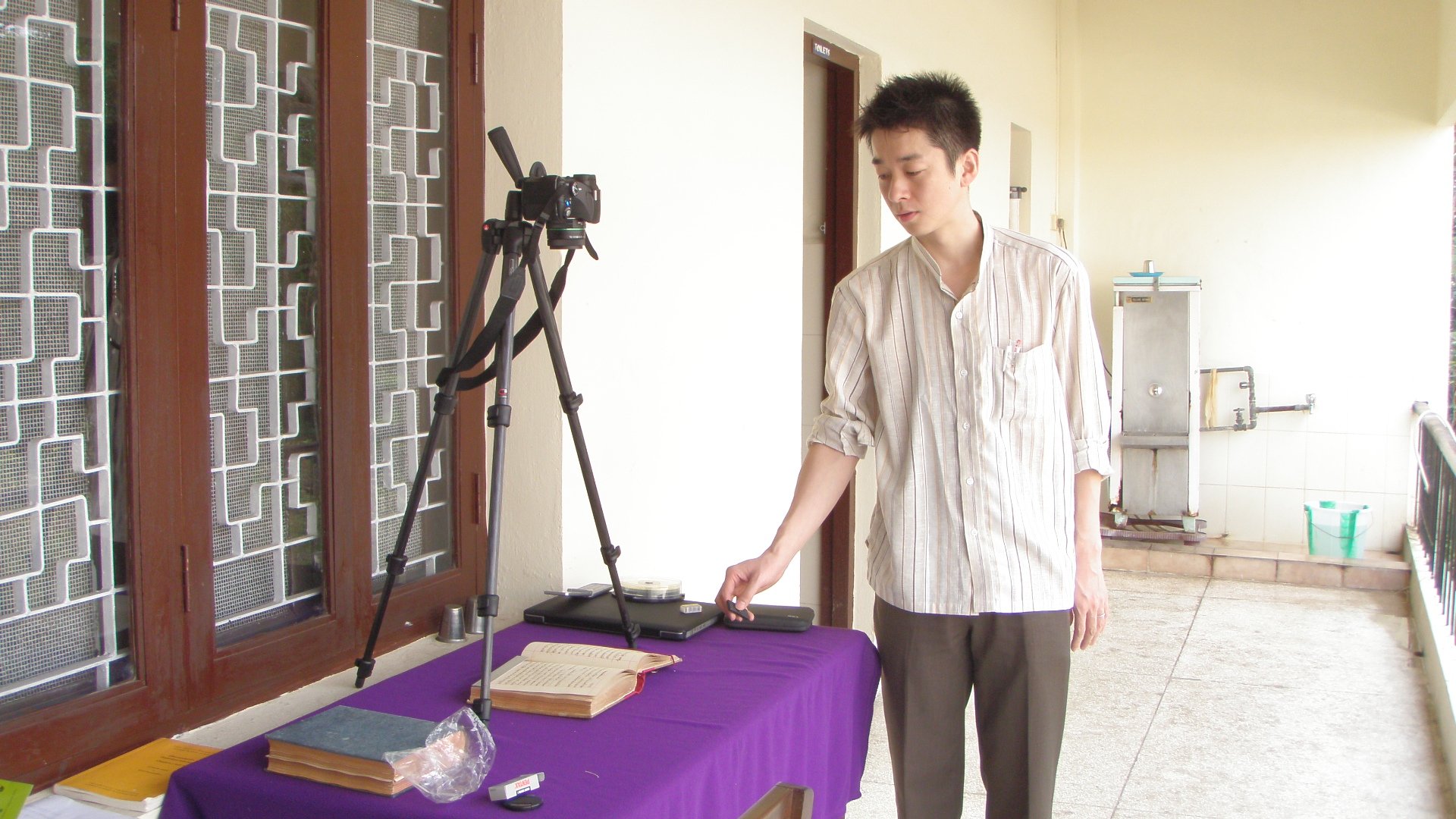
I have returned to India several times since then, though I should mention that being physically present in India is no longer a strict requirement for this research. While accessing manuscripts used to be a major hurdle, today’s researchers are much more connected. We exchange information more freely, utilize advanced digital tools, and some libraries are now making their collections available online.
Going Back and Forth Between Daily Life and Research
── What does your research routine look like? Are you doing textual editing at your computer all day long?
Shida I’d be lucky if I could (laughs). In reality, that’s far from the case. Compared to my postdoctoral years, it has become much harder to secure the time and space needed for deep, focused research. These days, there is more pressure to constantly produce results on a set schedule and in a standardized format. At the same time, with faculty numbers and research budgets shrinking every year, my responsibilities have grown; I am often asked to peer-review papers from other fields and to support students with their increasingly diverse research topics. All of this means that I have far less time than before to devote fully to my own research.
Another big change is that I now have a child. You hear all the time that once you have a child, your life becomes centered around them; I never thought that would happen to me, so it came as quite a surprise. As my family and I shared responsibilities like daycare and school drop-off, and cooking meals, our daily routines have naturally come to revolve around our child.
── What do you find most appealing about studying Indian philosophy?
Shida It’s a great joy when you encounter the ideas of past philosophers and experience moments of deep admiration. However, once you begin this study, you naturally develop the habit of questioning things you normally take for granted and noticing details that others might overlook. This is true of philosophy in general, not just Indian philosophy. The result is that daily life can actually become a bit harder to navigate (laughs).
Those “aha” moments in research are exciting, but the bulk of the work consists of steady, painstaking effort. In truth, textual editing has no finish line. To edit a single text, you must consult not only the manuscript itself but also dozens of related texts. As research in the field progresses, those related texts get revised and new material occasionally comes to light. This means you have to stay in constant contact with other researchers and continually refine your own work as new knowledge emerges.
The reason I keep going is less about simple enjoyment and more about a sense of mission. Since I have the privilege of conducting this research, I feel a duty to carefully edit the texts entrusted to me and preserve them for the future. I see my work as passing a torch to the next generation.
*1. Sanskrit is an ancient Indian language that served as a lingua franca for religion, philosophy, literature, and science across South Asia from antiquity through the medieval period.
*2. Katsura Shoryu (supervisor), Kei Kataoka, Shinya Moriyama (editors), Yoichi Iwasaki et al. (2025). Kaleidoscope of Indian Philosophy (Indo Tetsugaku no Mangekyo), Shunjusha.
| By My Side | 
Reading Glasses Dr. Shida says he has had good eyesight since childhood and still has 20/13 vision without glasses. Even so, he admits that he has not fully adjusted to wearing glasses since presbyopia (age-related farsightedness) set in. “Recently, I haven’t been able to do anything without my reading glasses,” he says. “I usually leave them on my forehead, but I still forget where I put them, so I keep extra pairs scattered around the places where I spend most of my time.” |
|---|---|
| This Book | 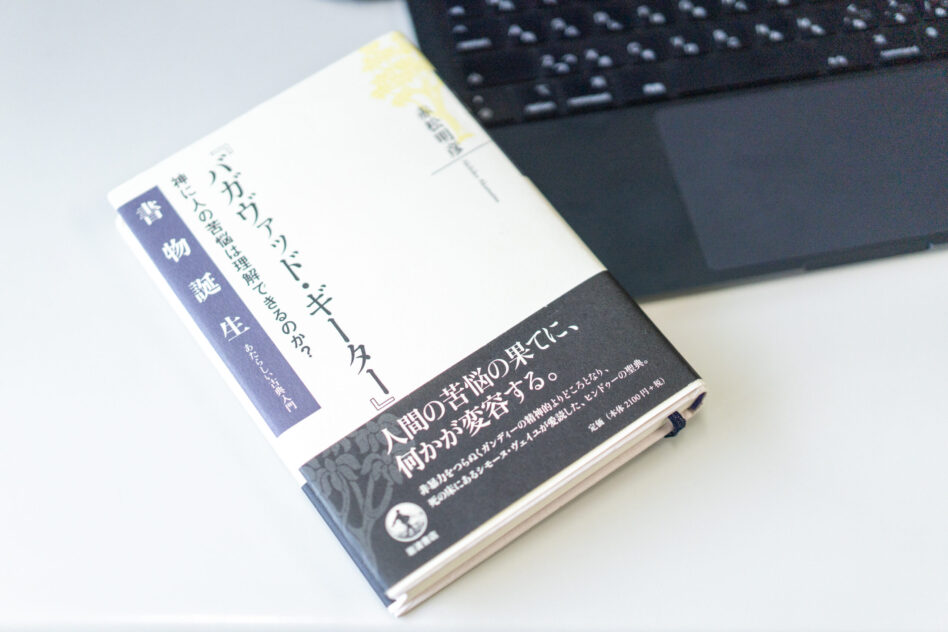
Bhagavad Gītā: Can God understand human suffering? by Akihiko Akamatsu, IWANAMI SHOTEN (2008) This book was written by Akihiko Akamatsu, a scholar of Indian philosophy and Dr. Shida’s mentor. “The Bhagavad Gita is a Hindu scripture, and this book is a commentary on it,” Dr. Shida says. “But it does not just explain the text. It also looks at how the text has been received and interpreted in the West. The breadth of his perspective and depth of his knowledge are impressive. I hope that someday I’ll be able to write a book like this.” |
Taisei Shida
Associate Professor, Institute of Humanities and Social Sciences, University of Tsukuba. After entering the Natural Sciences I track, College of Arts and Sciences, the University of Tokyo in 1994, he switched to the humanities and joined the program in Indian philosophy. He graduated in 1998 from the Faculty of Letters, the University of Tokyo and went on to earn a Master’s degree at the Graduate School of Humanities and Sociology in 2001 and a PhD in Literature in 2006. Over the years, he has worked as a Japan Society for the Promotion of Science (JSPS) Research Fellow for Young Scientists in 2007, a Program-Specific Assistant Professor at Kyoto University’s Hakubi Center for Advanced Research in 2010, and a visiting scholar at the Harvard-Yenching Institute in 2013. He has held his current position since 2015. He received the Japanese Association of Indian and Buddhist Studies (JAIBS) Prize in 2013. His research focuses on Indian classical studies and Indian philosophy, especially the critical editing and translation of Sanskrit texts, with particular attention to theories of perception and epistemology.
Interview and original article: Izumi Kanchiku (team Pascal)
Photo: Photographer yOU (Yuko Kawasaki)
-
 Research Grants
Visiting 3S Researchers #18 Dr. Michihiro SugaCapturing Transient Conformational Changes in Proteins to Unravel the Mysteries of Life —Unveiling the Unseen Intermediate States of Photosynthetic Reaction—
-
 Research Grants
Visiting 3S Researchers #17 Dr. Hikaru YabutaExploring the Origins of Life, Earth, and the Solar System through Chemical Analysis of Extraterrestrial Organic Matter —Insights from Asteroid Ryugu Samples Returned by the Hayabusa2 Mission—
-
 Research Grants
Visiting 3S Researchers #16 Dr. Taisei ShidaRestoring the Thoughts of Ancient Indian Philosophers from Texts —Identifying Errors in Palm Leaf Manuscripts—
-
 Research Grants
Visiting 3S Researchers #15 Dr. Kyoko MiuraDecoding the Secrets of Long-Lived, Cancer-Resistant Rats to Advance Medical Research —Pioneering the Development of Novel Model Animals—
-
 Research Grants
Visiting 3S Researchers #14 Dr. Megumi Sasaki Practice and Research in Safeguarding College Students’ Mental Health ─Searching for Clues to Reduce Procrastination─
-
 InformationResearch Grants
Visiting 3S Researchers #13 Dr. Kazuya SeoWhat Sports Engineering Can Do to Enhance the Appeal of Sports Events