-
About
- Kyoto Prize
-
Research Grants
-
Social Contributions
- Events
- News
About
Research Grants
Social Contributions
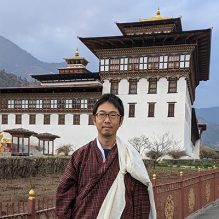
Associate Professor, Graduate School of Agricultural and Life Sciences, The University of Tokyo *Profile is at the time of the award.
2024Inamori Research GrantsHumanities & Sociology
Bhutan, renowned as the Land of Happiness, hosts a farming community facing deep poverty. Wildlife damage is one of the serious issues exacerbating this poverty. I am committed to making every effort to conduct research that can help alleviate such distress.
This study analyzes the determinants of electric fence abandonment in Bhutan using data from 180 sites nationwide. Electric fencing is an effective measure for preventing wildlife damage, but when fences are managed collectively, free-rider problems may arise, leading to insufficient maintenance and eventual abandonment. The results show that the probability of abandonment increases with the number of beneficiary farms, while a fine system greatly reduces abandonment. Medium-sized fences covering around 5–10 farms are the most cost-effective when no fine system is in place, whereas larger fences can also be effective when such a system exists.
Humanities & Sociology
















-219x219.png)