-
About
- Kyoto Prize
-
Research Grants
-
Social Contributions
- Events
- News
About
Research Grants
Social Contributions
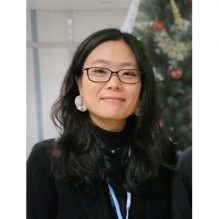
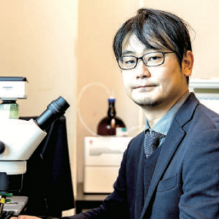
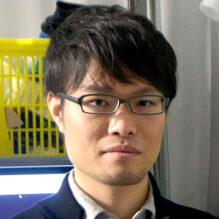
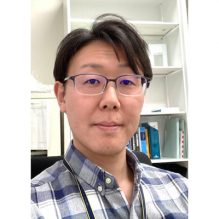
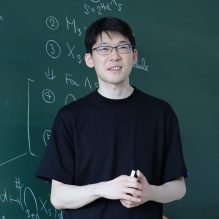
Assistant Professor, Graduate School of Engineering, Osaka University *Profile is at the time of the award.
2023Inamori Research GrantsScience & Engineering
I would like to express my sincere gratitude to the Inamori Foundation for selecting me for the Inamori Foundation Research Grant.
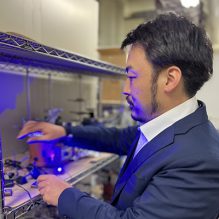
In this study, two pairs of very high quality brilliant-cut diamonds of about 0.2 carat are used to apply pressure. The material is pressurized between the culet of the diamonds, which is a very small area to generate ultrahigh pressure, so the sample size is about 5 microns, making this an artisanal experiment. Also, diamonds are consumable because they break under ultrahigh pressure. I believe that the support of this research grant will allow me to further advance my research.
In this study, aiming toward the realization of room-temperature superconductors, we attempted to synthesize novel ternary hydrides under high pressure. In particular, targeting CaBH8, we used ternary and quaternary hydrides as starting materials and performed simultaneous in situ synchrotron powder X-ray diffraction and electrical resistance measurements. When the ternary hydride Ca(BH4)2 was hydrogenated as a starting material, the results suggested the formation of a new hydride, CaBHx (x = 5–6), in which calcium atoms are arranged in an fcc structure. Although this material did not exhibit superconductivity, it showed metallic electrical conduction, suggesting that a material with a higher hydrogen content than the starting material had been synthesized. We also attempted to reproduce nitrogen-doped LuHx using the patented method reported by Dias’s groups, but room-temperature superconductivity was not observed.
Science & Engineering