-
About
- Kyoto Prize
-
Research Grants
-
Social Contributions
- Events
- News
About
Research Grants
Social Contributions
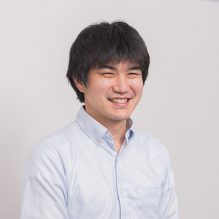
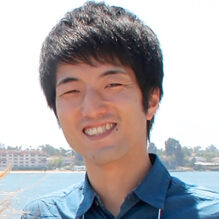
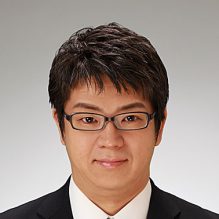
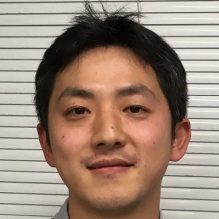
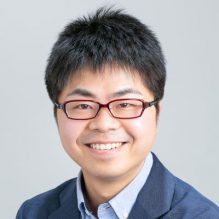
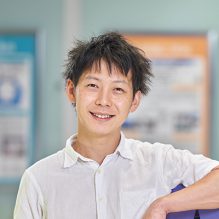
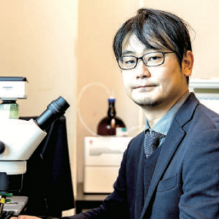
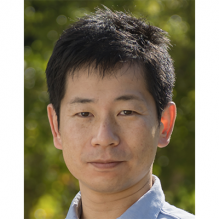
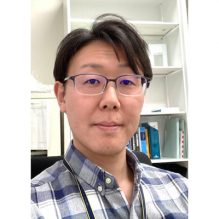
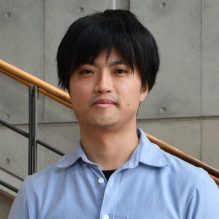
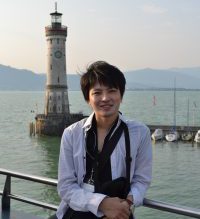
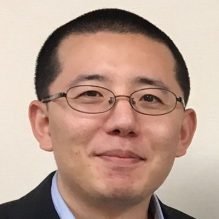
Associate Professor, Faculty of Engineering, Kyushu Institute of Technology *Profile is at the time of the award.
2024Inamori Research GrantsScience & Engineering
I am very honored to have the Inamori Foundation grant to develop my research. I will devote myself to pursue the fundamental question, "How is the river morphology formed? and devote myself to contribute to the realization of a society that coexists in harmony with nature.
This study aimed to develop a method for detecting concealed active faults by analyzing the relationships between the distribution of knickpoints and waterfalls and seismic activity as well as active faults. Using high-resolution 5 m DEM data and statistical analyses, we found that knickpoints and waterfalls are frequently observed in the vicinity of faults, with the influence of fault proximity being particularly pronounced at locations exhibiting large gradient changes. Furthermore, even in areas where active faults have not been previously identified, a spatial concentration of geomorphic features and earthquake hypocenters was observed, suggesting the possible presence of previously unrecognized faults. These results demonstrate that the proposed approach is an effective method for objectively and systematically extracting the potential presence of concealed active faults over broad regions. The method is therefore expected to contribute to the prior assessment of seismic hazard risks and to inform disaster prevention and mitigation planning.
Itsukushima R. (2025) Relationship between waterfall distribution and seismic hazards in large earthquake-prone areas Natural Hazards 121, 19889–19902 https://doi.org/10.1007/s11069-025-07585-6
Itsukushima R. (2025) Role of long-term geological processes in shaping flood-prone areas npj Natural Hazards 2, 37 https://doi.org/10.1038/s44304-025-00093-4
Science & Engineering