-
About
- Kyoto Prize
-
Research Grants
-
Social Contributions
- Events
- News
About
Research Grants
Social Contributions

InaRIS Fellow (2023-2032)
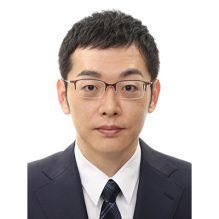
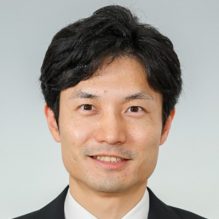
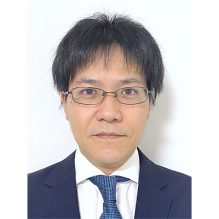
Professor and Special Advisor to the President,Graduate School of Engineering, Nagoya Institute of Technology*Profile is at the time of the award.
2023InaRISScience & Engineering
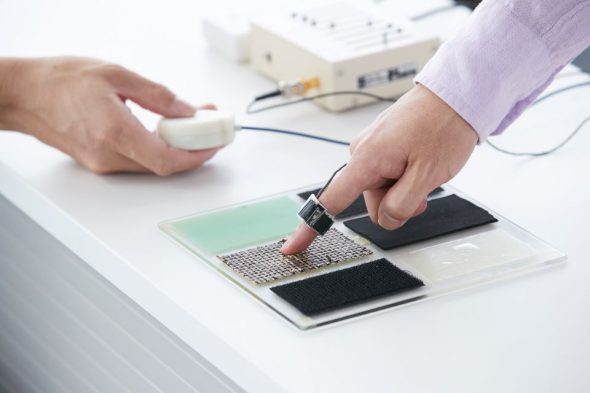
I feel grateful and have a sense of responsibility for the opportunity to thoroughly explore the sense of touch. Through this research, I would like to step into the essence of people's diversity, self, and creativity. Although I am both excited and anxious about what perspectives I will be looking at in 10 years, I would like to pursue my own interests while striving for co-creation through interdisciplinary exchange and collaborative research.
[Overview]
The realization of tactile sharing requires a fundamental understanding of primitive tactile perceptual information as well as skin and motor characteristics. In this study, the temporal aspects of vibrotactile perception, which had previously received little attention, were investigated, and it was demonstrated that not only the amplitude but also the phase components influence perception. In particular, the effect of phase extended into high frequencies, indicating the potential for high-fidelity tactile reproduction. Furthermore, the basic mechanisms underlying force modulation in touch actions were investigated, revealing that fingertip stiffness significantly correlates with natural pressing force during tracing motions. This causal relationship was further supported by the development of a device that can alter the fingertip stiffness. In addition, toward future haptic informatization, a method for estimating fingertip pressure distributions, which is crucial for tactile perception, was established by integrating vibration propagation with image information.
[Details]
Shared tactile perception involves distinct objectives at the mechanical stimulation, perceptual, and cognitive levels, depending on context and purpose, and requires primitive information that expresses tactile perception and clarifies its relationship with individual skin and motor characteristics. By analyzing human vibrotactile perception with a focus on the previously overlooked temporal aspect, this study provides new perspectives on the informatization of tactile perception. Because the sense of touch is fundamentally an active sense, understanding the natural force-modulation mechanisms of individuals is crucial for tactile sharing. By focusing on skin characteristics and friction, a fundamental causal relationship was demonstrated. Additionally, looking ahead, a method for estimating the pressure distribution of the fingertip was established. Details are provided below.
1. Influence of Temporal Components on Vibrotactile Perception
Vibrotactile stimulation elicited on the skin by contact with an object is a crucial element in determining tactile sensation. Vibrotactile perception has been explained primarily based on energy derived from amplitude components. This study measured the perceived intensity of simple vibrations with altered waveforms and durations, and detection sensitivities by changing the amplitude of sinusoidal vibrations in transient, velocity, and acceleration, suggesting that temporal changes in vibration may influence perception. Then, phase components were extracted from skin vibrations elicited by tracing real textures, and vibrotactile stimuli that combined them with noise vibrations were investigated. Experimental results indicated that phase components improved subjective similarity and influenced perception even in the high-frequency range.
2. Fundamental Mechanism of Force Modulation in Tracing Actions
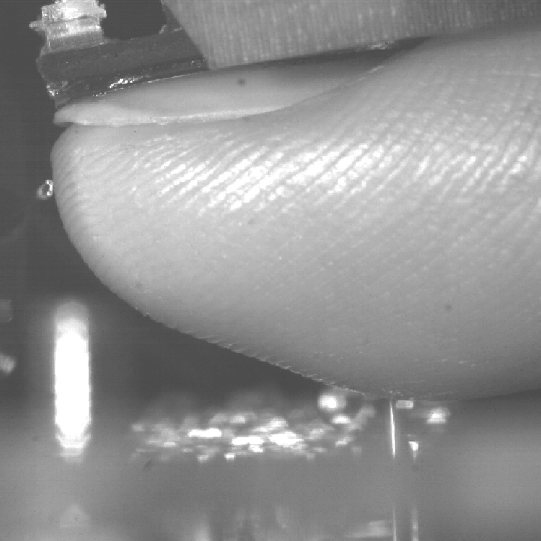
In tactile perception, humans strategically modify movements according to purpose and object. However, individual differences exist in the underlying movements. Investigating the friction coefficient and exerted force revealed that participants exerting greater force tended to have lower friction coefficients and reduced sensitivity. The friction coefficient correlates with contact area. Therefore, measuring fingertip stiffness and natural contact force showed a significant correlation between them, revealing that stiffer fingertips tend to exert greater pressing force, and a wearable device capable of altering fingertip stiffness was developed, supporting that causal relationship.
3. Development of a Pressure Distribution Sensor
For the informatization of tactile sensations, pressure distribution is indispensable alongside vibration, but measurement technologies have not yet been established. This study proposed a method of estimating fingertip pressure distribution by utilizing object images and changes in the amplitude of vibrations applied to the finger, employing multimodal machine learning. Methods for image acquisition and finger posture compensation will be investigated, along with verification using a larger number of samples.
[Key Publications]
[Tactile Perception]
T. Kuhara,,K. Komazaki, J. Watanabe, Y. Tanaka, Pseudo-dribbling experience using single overlapped vibrotactile stimulation simultaneously to the hand and the feet, Multisensory Research, Sep 24:1-20, 2025.
Y. Ju, X. Meng, H. Taguchi, T. S. Gunasekaran, M. Hoppe, H. Ishikawa, Y. Tanaka, Y. S. Pai, K. Minamizawa, Haptic empathy: Investigating individual differences in affective haptic communications, Proceedings of CHI'25, article no. 501, pp. 1–25, 2025.
[Mechanisms in Tracing Actions]
K. Kurimoto, D. A. Torres, Y. Tanaka, A. M. L. Kappers, F. Giraud, Individual differences of friction coefficient and normal force on friction perception, Proceedings of 2025 IEEE World Haptics Conference, pp. 78–84, 2025.
K. Kurimoto, A. M. L. Kappers, Y. Tanaka, Anisotropy in normal force and friction during active tracing, Proceedings of the EuroHaptics 2024, pp. 162–167, 2024.
[Application]
H. Suzuki, H. Yukawa, K. Minamizawa, Y. Tanaka, Effects of operation prediction sharing for collaborative avatar robot, IEEE Access, vol. 13, pp. 25419–25431, 2025.
C. Ikejiri, H. Yukawa, Y. Tanaka, Comparison of perceptual characteristics of vibrotactile and squeezing stimuli in haptic devices, Proceedings of EuroHaptics 2024, pp. 103–113, 2024.
In information systems, input/output interface technology, which is the contact point between the systems and humans and/or the real world, is an important component along with computation, storage, and communication. According to the development of AI, it is now possible to sense/capture real-world phenomena from multiple perspectives, and to control robots and autonomous systems utilizing the results of computation, analysis, and decision-making, as feedbacks to the real world. In particular, the development of the understanding of vision and auditory information technologies have been enabled high-speed, high-quality remote communication and casual interaction between humans and machines. The next frontier of the five human senses is said to be the sense of touch, and lots of technology have been developed. However, the research on the theory of tactile perception has only just begun to be elucidated, and there are no innovative methods and devices that can serve as an infrastructure for society.
Yoshihiro Tanaka's research proposal aims to understand tactile perception from informatics points of view, and to informatize an individual's sense of touch. He regards tactile sensing as the perception of mechanical interaction between the human body and the external world. He approaches it from the understanding of the dynamics of the skin that is touching the objects, the mutual control properties of touch and motion, and cognitive properties that perform information filtering. It is an ambitious concept that aims phenomenologically to establish technologies to capture, modulate, measure, represent, and share tactile perception. By pioneering the theory underlying haptic perception and developing the related technology, it is hoped that information systems will acquire multimodal interactions and bring about innovations in telecommunications and AI. Dr. Tanaka has been engaged in research and development to quantify and utilize an individual's sense of touch and has achieved significant research results through his creative approach, including the characteristics of skin, movement characteristics, and cognitive characteristics regarding sensitivity, movement, texture, and comfort. With this proposal, he aims to clarify these fragmented studies into an integrated manner, and he is one of the few researchers who have initiated clues to elucidate the principles of haptic perception.
Dr. Tanaka is an up-and-coming researcher who is leading the new era of tactile perception research. With the support of the InaRIS Fellowship, the distribution of subjective information through tactile perception and non-verval understanding of others will progress throughout his research period of the next decade. He is expected to create a horizon of informatics based on the haptics perception. It is hoped that the use of tactile sensation will promote respect for diversity and co-creation with others, and contribute to the construction of a society in which sensibility and techniques are richly created and passed down.
Science & Engineering