-
About
- Kyoto Prize
-
Research Grants
-
Social Contributions
- Events
- News
About
Research Grants
Social Contributions
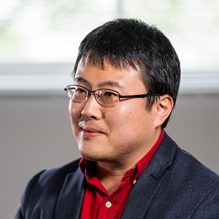
InaRIS Fellow (2020-2029)
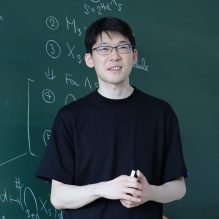
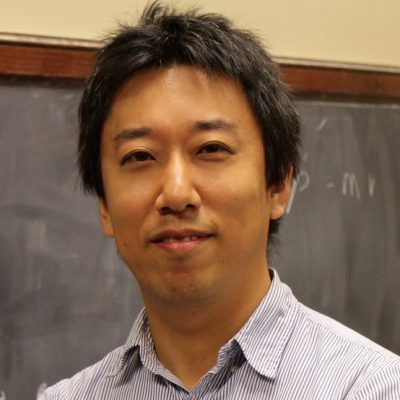
Associate Professor,Graduate School of Art and Sciences, The University of Tokyo*Profile is at the time of the award.
2020InaRISScience & Engineering

First of all, the long-span support from the InaRIS Fellowship Program allows me to take a long-term research approach. Because it also allows me to hire postdocs and research staff over an extended period, it also serves the purpose of developing human resources. I’m affiliated with an organization called Komaba Institute for Science, where researchers from other fields gather as well. I’m looking forward to working and discussing with other researchers that I have yet to see under this program so that we can try to shape new academia together.
[Overview]
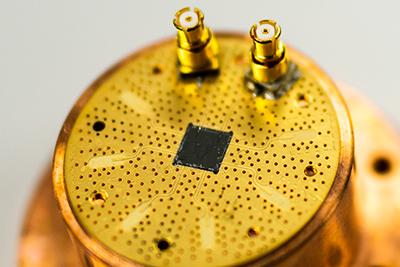
To realize fault-tolerant quantum computation, we have pursued the following studies. We fabricated two-dimensional integrated circuits that reach the loss limit of silicon using planar resonators, and demonstrated their fundamental quantum control. In parallel, we developed a mechanical oscillator capable of serving as a quantum memory with a lifetime exceeding one second. Furthermore, to improve the fidelity of two-qubit gates—which remain a major challenge in conventional superconducting quantum computers in Japan—we discovered and implemented a new type of quantum gate compatible with this chip architecture, achieving a world-leading two-qubit gate fidelity of approximately 99.9%. In addition, we initiated research on electron traps that have the potential to surpass the performance of existing quantum systems, successfully capturing electrons at room temperature and demonstrating their cooling and image-current detection.
[Details]
1. Superconducting Quantum Bits
1.1 World-Leading Performance in Two-Dimensional Resonators
Bosonic codes embed a logical qubit into a single high-quality resonator and implement quantum error correction within that mode, instead of using multiple physical qubits. To date, three-dimensional microwave cavities—capable of storing electromagnetic fields in vacuum—have served as the primary platform for realizing such architectures. However, their large physical dimensions and the difficulty of integrating complex quantum circuits into a 3D structure have posed fundamental challenges for scaling, including the realization of two-qubit gates and the development of fully integrated, scalable bosonic-code quantum processors. Achieving a scalable architecture requires that all components be integrated into a two-dimensional circuit.
To address this challenge, the present work focused on improving the performance of two-dimensional superconducting circuits. Building on our previous results, where high-performance superconducting qubits were achieved using titanium nitride (TiN) films grown on silicon substrates, we further identified circuit geometries that mitigate surface-related loss mechanisms. As a result, we successfully realized a two-dimensional resonator with approximately an order-of-magnitude lower loss than conventional designs. Moreover, we integrated this resonator with a superconducting qubit and a quantum coupler, and performed preliminary experiments toward bosonic-code implementation, including quantum control of microwave photons stored in the 2D resonator. We are continuing to advance toward the full realization of bosonic codes on an integrated platform.
1.2 Ultra-High-Fidelity Quantum Gates in Fixed-Frequency Superconducting Quantum Processors
Quantum processors based on transmon qubits—the standard architecture for superconducting qubits—are generally implemented using two distinct approaches. The first is the flux-tunable architecture, in which SQUID loops allow circuit parameters to be controlled in situ via magnetic flux at millikelvin temperatures. This approach compensates for fabrication-induced frequency variations and significantly suppresses crosstalk between qubits, enabling extremely high-fidelity gates, with state-of-the-art demonstrations reaching approximately 99.9% in multi-qubit systems.
The second approach is the fixed-frequency architecture, where qubit parameters cannot be tuned after fabrication. Although higher gate fidelities are more difficult to achieve in this architecture, it offers substantial advantages: superior scalability and enhanced stability. Fixed-frequency qubits require no flux-bias wiring, allowing the minimum wiring count per qubit. Furthermore, the absence of flux control reduces susceptibility to external noise, enabling the realization of more stable qubits. For these reasons, fixed-frequency architectures currently represent the most scalable quantum-computing platforms in practice.
Despite their advantages, fixed-frequency architectures have historically suffered from limited gate performance. This limitation arises from a fundamental trade-off between gate speed and crosstalk: conventional gate schemes cannot improve one without degrading the other. In the first three years of this project, we addressed this issue by introducing a quantum-coupler circuit into the fixed-frequency architecture, successfully breaking this trade-off. However, although effective for small-scale circuits, this method imposed stringent constraints on circuit parameters, making it impractical for large-scale implementations.
In the present phase of the research, we further developed and generalized this coupler-based approach and created a new quantum gate—termed the TIP gate—that operates over a substantially broader range of circuit parameters. The TIP gate enables fast operation and achieves an ultra-high fidelity of approximately 99.9%, exceeding the threshold for fault-tolerant quantum error correction and rivaling the performance of flux-tunable architectures—all while retaining the advantages of fixed-frequency qubits. In addition, the TIP gate incorporates functionality that allows detection of certain classes of errors, making it highly compatible with quantum-error-correction protocols. The TIP gate is currently under patent application.
1.3 Ultra-High-Performance Thin-Film Mechanical Resonators
As described in Section 1.1, state-of-the-art superconducting quantum circuits are already limited by losses originating from the silicon substrate, making further improvements in coherence increasingly challenging. This motivates the widespread development of quantum error-correction techniques. An alternative approach is to transfer quantum states to a physical system with even longer lifetimes, thereby creating a quantum memory capable of preserving quantum information beyond the coherence time of superconducting circuits. One promising candidate for such a quantum memory is the mechanical resonator. Owing to their much lower operating frequencies compared with superconducting microwave circuits, mechanical resonators have achieved coherence times surpassing those of superconducting devices.
In this work, we aimed to develop mechanical resonators that can be coupled to superconducting circuits. Our high-performance superconducting circuits are based on crystalline titanium nitride (TiN) films grown on silicon substrates. If mechanical resonators can be fabricated directly from this superconducting film, it becomes possible to realize thin-film mechanical quantum memories that are monolithically integrated with superconducting circuitry.
Titanium nitride is also an attractive material for high-performance mechanical resonators. In MEMS-type thin-film resonators, applying tensile stress is known to enhance mechanical quality factors, and high-stress silicon nitride membranes have been extensively studied for this purpose. In this project, we discovered that crystalline TiN exhibits extremely large intrinsic tensile stress at the interface with the silicon substrate—exceeding that of conventional high-stress silicon nitride. Furthermore, by thinning this high-stress TiN film and characterizing the device at 2 K, we successfully developed ultra-high-performance thin-film mechanical resonators with lifetimes exceeding one second.
2. Electron Traps
2.1 Room-Temperature Electron Trapping, Resistive Cooling, and Image-Current Detection
Continuing from the work conducted in the first three years, we further developed foundational technologies for electron trapping through room-temperature experiments. We constructed a device in which trap electrodes are embedded inside a high-Q coaxial microwave resonator operating at room temperature, allowing simultaneous electron capture, cooling, and detection. When an electron oscillates in the vicinity of the trap electrodes, it induces image currents on the electrode surfaces. These image currents are stored in the resonator mode and subsequently emitted into an external coaxial transmission line, enabling both cooling of the electron motion and electrical detection of its dynamical signal.
Using this setup, we achieved the world’s first cooling and detection of electrons trapped inside a Paul trap. The measurement sensitivity was limited by thermal noise, and the minimum detectable signal was estimated to correspond to several hundred electrons.
2.2 Toward Electron-Trap Quantum Technology in a Dilution Refrigerator
As described above, cooling electrons levitated in vacuum requires non-contact microwave-resonator cooling. The ultimate cooling limit is set by the temperature of the environment in which the resonator resides. Therefore, reaching temperatures sufficient for coherent quantum-state control of electrons necessitates operating electron traps inside a dilution refrigerator.
Moreover, to build large-scale electron-trap arrays and interconnect them via electrical wiring, it is essential to fabricate integrated trap electrodes using microfabrication techniques. We are currently establishing these cryogenic electron-trap experiments while assessing the performance and feasibility of operating such systems as quantum-computing devices.
[Key Publications]
2025:
1. High-fidelity all-microwave CZ gate with partial erasure-error detection via a transmon coupler, Shotaro Shirai, Shinichi Inoue, Shuhei Tamate, Rui Li, Yasunobu Nakamura, and Atsushi Noguchi, arXiv:2511.01260 (2025).
2. Trapping an atomic ion using time-division multiplexed digital-to-analog converters Ryutaro Ohira, Masanari Miyamoto, Shinichi Morisaka, Ippei Nakamura, Atsushi Noguchi, Utako Tanaka, Takefumi Miyoshi
Appl. Phys. Lett. 127, 234001 (2025)
3. High-Q membrane resonators using ultra-high-stress crystalline TiN films
Yuki Matsuyama, Shotaro Shirai, Ippei Nakamura, Masao Tokunari, Hirotaka Terai, Yuji Hishida, Ryo Sasaki, Yusuke Tominaga, Atsushi Noguchi,
Appl. Phys. Lett. 127, 222202 (2025).
4. Numerical Investigations of Electron Dynamics in a Linear Paul Trap
Andris Huang, Edith Hausten, Qian Yu, Kento Taniguchi, Neha Yadav, Isabel Sacksteder, Atsushi Noguchi, Ralf Schneider, Hartmut Haeffner,
arXiv:2503.12379 (2025).
5. Enhancing Intrinsic Quality Factors Approaching 10 Million in Superconducting Planar Resonators via Spiral Geometry
Yusuke Tominaga, Shotaro Shirai, Yuji Hishida, Hirotaka Terai, Atsushi Noguchi
EPJ Quantum Technology 12, 60 (2025).
6. Semi-analytical Engineering of Strongly Driven Nonlinear Systems Beyond Floquet and Perturbation Theory
Kento Taniguchi, Atsushi Noguchi, Takashi Oka
arXiv:2502.17200 (2025).
7. Image Current Detection of Electrons in a Room-Temperature Paul Trap
Kento Taniguchi, Atsushi Noguchi
Phys. Rev. A 112, 022420 (2025).
8. Quantum Logic Spectroscopy of an Electron and Positron for Precise Tests of the Standard Model
Xing Fan, Atsushi Noguchi, Kento Taniguchi
Physical Review A 111, 042806 (2025).
2024:
9. Superconducting surface trap chips for microwave-driven trapped ions
Yuta Tsuchimoto, Ippei Nakamura, Shotaro Shirai & Atsushi Noguchi
EPJ Quantum Technology 11, 56 (2024).
10. News & Views: A long lifetime floating on neon
Atsushi Noguchi
Nature Physics 20, 16 (2024).
2023:
11. Compact atom source using fiber-based pulsed laser ablation
Alto Osada, Ryuta Tamaki, Wenbo Lin, Ippei Nakamura, and Atsushi Noguchi
Appl. Phys. Lett. 122, 184002 (2023).
12. All-microwave manipulation of superconducting qubits with a fixed-frequency transmon coupler
Shotaro Shirai, Yuta Okubo, Kohei Matsuura, Alto Osada, Yasunobu Nakamura, and Atsushi Noguchi
Phys. Rev. Lett. 130, 260601 (2023).
13. Efficient low-energy single-electron detection using a large-area superconducting microstrip
Masato Shigefuji, Alto Osada, Masahiro Yabuno, Shigehito Miki, Hirotaka Terai, and Atsushi Noguchi
arXiv:2301.11212 (2023).
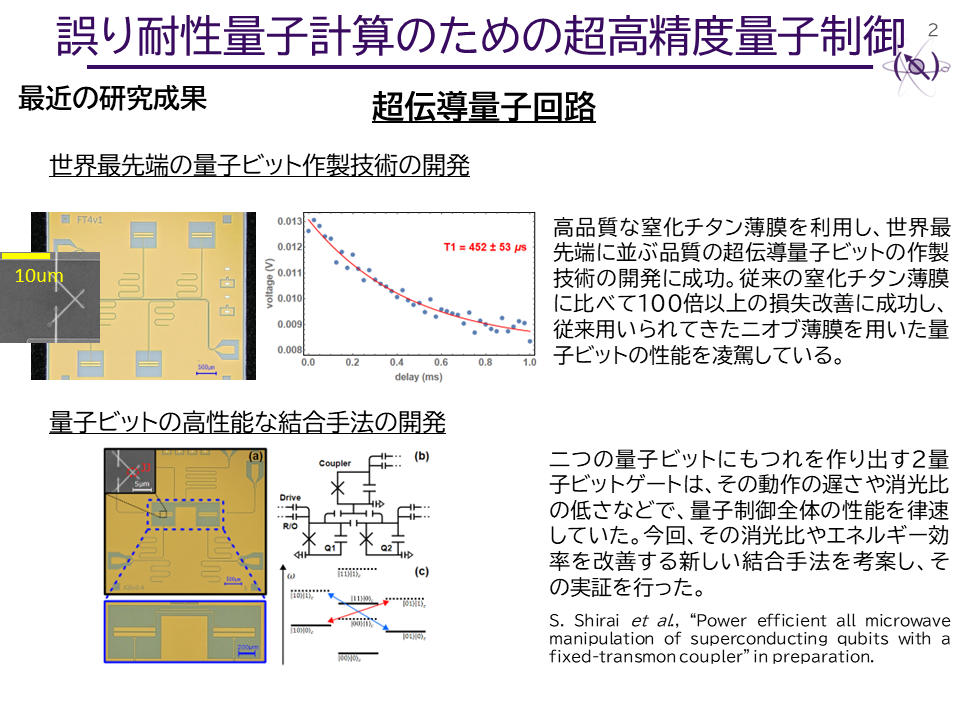
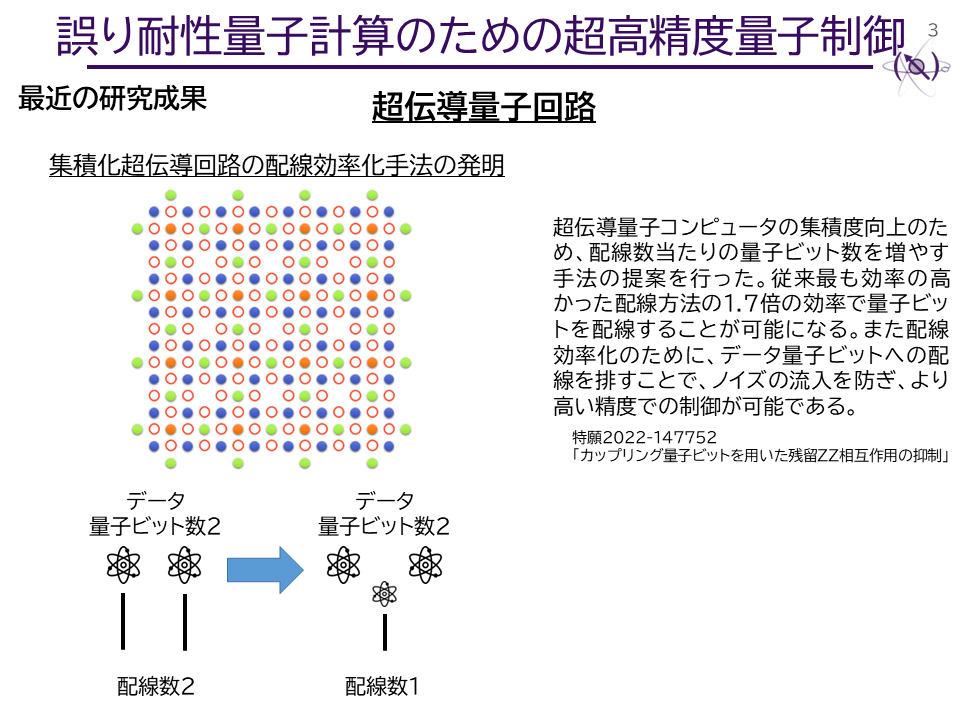
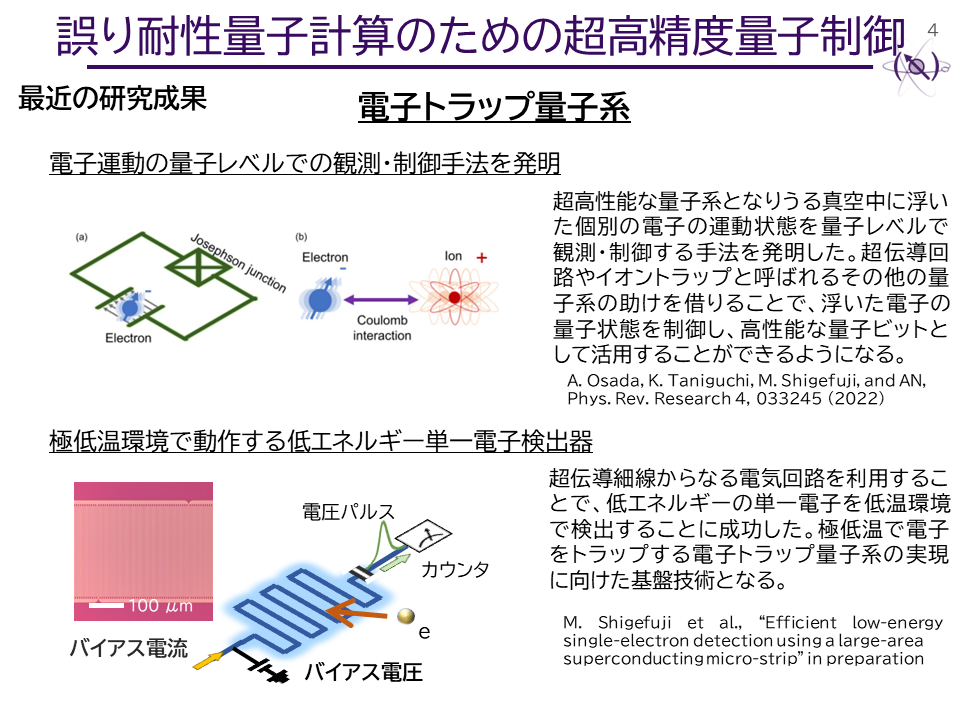
We have fabricated high-performance superconducting quantum circuits using titanium nitride. The maximum energy relaxation time of the superconducting qubits was 450 us, which is one of the longest value of the world. We also discovered a new type of a resonance between superconducting qubits using couple qubit and succeeded in performing high-fidelity quantum gate. This method can reduce the number of wires in a superconducting quantum computer and we propose the scalable construction of it. An electron trap is one candidate of the highest-performance quantum systems. Trapped electron in the vacuum has a long coherence and wideband quantum manipulations, which realize an ultra-precise quantum system. We developed a method to detect low-energy electrons at cryogenic temperatures for the electron trap experiment. The behavior of electrons trapped at cryogenic temperatures is studied by numerical simulation.
1. Superconducting qubit
1.1 Fabrication of a high performance qubit
Superconducting qubits, called transmon, are widely used around the world in superconducting quantum computers because of their circuit simplicity and scalability. Since the improvement of their performance directly leads to higher fidelity quantum gates, much research has been conducted in decades. In this study, we focused on TiN thin films epitaxially grown on intrinsic silicon substrates and succeeded in fabricating high quality transmon: energy relaxation times of up to 450 us, and coherence times of up to 150 us, were achieved, respectively. Recently epitaxial grown tantalum thin film on a sapphire substrate has been known as the good material for state-of-the-art superconducting circuit. Our transmon with TiN film on Si substrate is reached to the performance of tantalum transmon, and as silicon is much easier to fabricate than sapphire, our TiN qubit has promising candidate for high performance superconducting circuits.
1.2 High fidelity gate with nonlinear coupler and its integration method
A two qubit gate is often limit the performance of the quantum computer. Three main methods of implementing two-qubit gates in superconducting quantum computers have been implemented, respectively: resonance using frequency-variable qubits, crossed resonance using fixed-frequency qubits, and parametric resonance using magnetic field modulation of SQUID couplers. Although these methods have their advantages and disadvantages, we have proposed and realized a new resonance-based gate using fixed-frequency qubits to overcome the disadvantages of these gating methods. This method can eliminate residual interactions during idle time that cause errors, requires less microwave power for gating, and can be extended to reduce the number of wires to the qubits. The new resonance, which they call NCAR (Nonlinear Coupler Assisted Rabi) resonance, is produced by adding another coupler qubit between the qubits and driving the coupler qubits with microwaves. We have actually fabricated a sample and verified the operation of a two-qubit gate based on this scheme. This new gate method can also be used to realize large-scale superconducting quantum circuits with a small number of wires.
2. Electron trap quantum system
2.1. Feasibility study on ground-state cooling and single-phonon readout
Unlike ion traps, laser cooling techniques are not applicable to electron traps, and it is difficult to achieve a quantum system with trapped electrons. Therefore, we discussed the feasibility of a method to cool the electrons trapped in the vacuum to the vibrational ground state and detect their vibrational quantum. We proposed three hybrid system with trapped electron: high-Q superconducting resonator, superconducting quantum bit, and laser-cooled ions. The first two methods are achieved by trapping electrons at
With its beginnings at the dawn of the 20th century, quantum mechanics has made significant progress over the past 100 years, exerting a major impact on our perception of the world in a wide range of scientific fields. Predictions using quantum mechanics have been verified on every scale, from elemental particles to the whole universe, thus consolidating its presence as a basic theory of physics. At the same time, quantum mechanics serves as a foundation for technologies that form the core of today’s
information-oriented society, including those for integrated electronic circuits and optical communications. Though one may not be aware of it on a daily basis, quantum mechanics has become an integral part of our lifestyle.
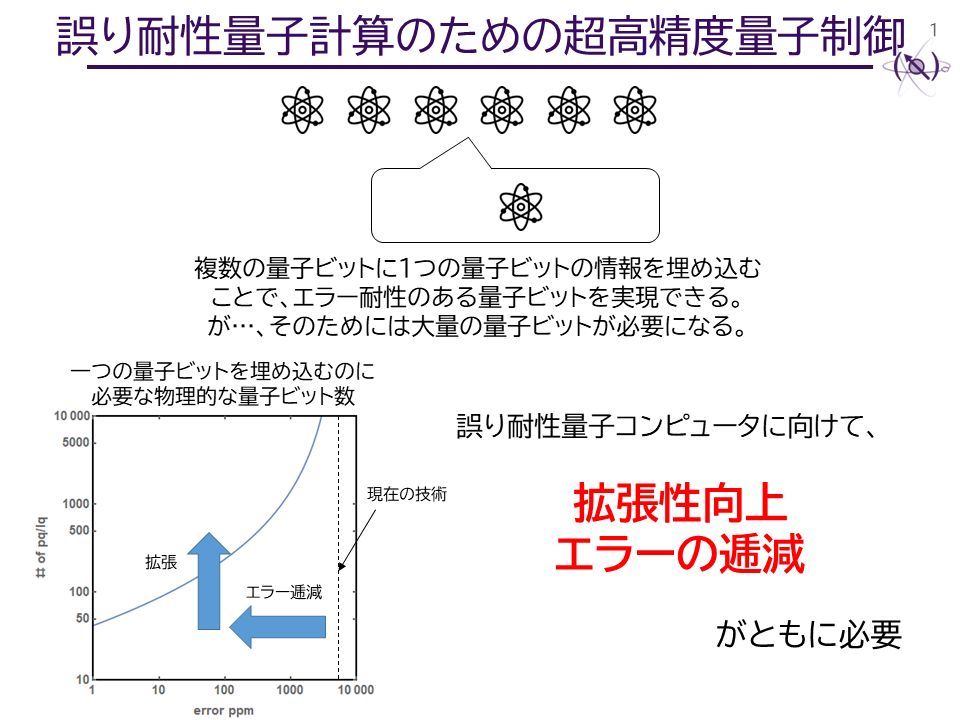
Meanwhile, discussions on the approach of quantum information science that applies basic principles of quantum mechanics, such as superposition of quantum states, to research and development of information processing began as recently as the start of this century. Research efforts have accelerated globally, and operation tests of small-scale quantum computing units have already started. More recently, demonstration of quantum supremacy, whose performance surpasses that of existing supercomputers, has been a burgeoning topic. To do justice to the potential of quantum computers, however, it is believed to be
essential to realize fault-torelant quantum computation that implements error-resilient architecture using quantum control of a higher level of precision.
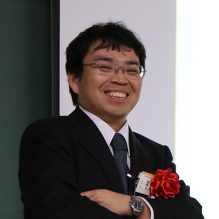
Dr. Noguchi’s research proposal addresses this challenge directly. He is ambitiously seeking to carve out the future of quantum information technologies, such as quantum computing and quantum sensing, by realizing advanced quantum control in a quantum system with higher degrees of freedom, as he pursues greater precision in the control of quantum freedom. Realization of fault-torelant quantum computation, which will not be possible without high-precision quantum control of a system with a high degree of freedom, is not only an overarching goal that would set a major milestone in quantum information science but also one of the peaks of humankind’s scientific and technological prowess in a world governed by quantum mechanics.
Dr. Noguchi has conducted a variety of physical experiments to achieve one original outcome after another, which ranges from those dealing with atomic-scale quantum systems, such as ions that are laser-cooled and trapped in a vacuum, to those analyzing millimeter-scale quantum systems, such as qubit elements realized on superconducting circuits and mechanical vibrations of semiconductor nanomechanical elements. He is one of the few young researchers in the world who has a superb command of a variety of quantum control technologies from radio waves and microwaves to infrared light and visible light over a wide range of frequencies and energy scales. In this proposed project, too, Dr. Noguchi not only aims to realize a novel quantum control technology using superconducting circuits but also plans to build a new quantum system, such as for electrons trapped in an electric field in a vacuum, and then establish a technique for controlling the quantum state with a high degree of precision.
Dr. Noguchi is a promising leader in the research of quantum control technology for quantum computation. With support from the InaRIS Fellowship Program, it is expected that he will be more productive than ever in furthering his elaborate research based on his novel ideas over the coming decade.
The Inamori Foundation announced the 2026 fellows for the Inamori Research Institute for Science (InaRIS) Fellowship Program on March 13, 2026.
The Inamori Foundation announced the 2025 fellows for the Inamori Research Institute for Science (InaRIS) Fellowship Program on March 14, 2025.

The Inamori Foundation started to accept applications for the 2025 Inamori Research Institute for Science (InaRIS) Fellowship on May 20, 2024.
On April 20, the 2024 InaRIS Fellowship Award Ceremony was held at a hotel in Kyoto.
The Inamori Foundation announced the 2024 fellows for the Inamori Research Institute for Science (InaRIS) Fellowship Program on March 15, 2024. This year, we will welcome two new fellows, Hiroshi Suzuki (Professor, Graduate School of Medicine, Nagoya University) and Ayuko Hoshino (Professor, Research Center for Advanced Science and Technology, The University of Tokyo), who were...
The Inamori Foundation started to accept applications for the 2023 Inamori Research Institute for Science (InaRIS) Fellowship on May 23, 2022.
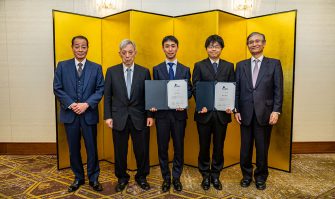
From the left: Executive Managing Director Shoichi Himono, InaRIS Chair Shigetada Nakanishi, the 2023 Fellows Yoshihiro Tanaka and Yasutaka Kamei, and Chair of Selection Committee Hiroto Yasuura On April 22, the InaRIS Fellowship Award Ceremony was held at a hotel in Kyoto. The 2023 InaRIS Fellows were recruited under the theme “Transcending the Future with...

The Inamori Foundation announced the 2023 fellows for the Inamori Research Institute for Science (InaRIS) Fellowship Program on March 17, 2023.
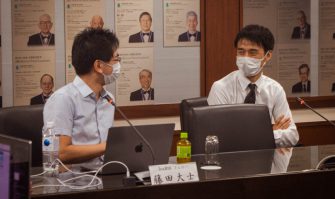
The Advisory Board Meeting of the Inamori Research Institute for Science (InaRIS) Fellowship Program was held at the Inamori Foundation in Kyoto, on October 4. There the committee members and the fellows had a discussion over their research themes. The InaRIS Fellowship Program was established in 2019 to encourage researchers to pursue their curiosity...
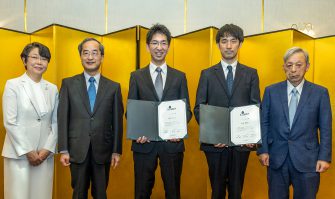
On April 23, InaRIS Fellowship Award Ceremony was held at a hotel in Kyoto for the first time since the establishment of the Fellowship in 2019.
The Inamori Foundation announced the 2022 fellows for the Inamori Research Institute for Science (InaRIS) Fellowship Program on March 18, 2022.

The Advisory Board Meeting of Inamori Research Institute for Science (InaRIS) Fellowship Program was held online on October 3 for the Committee members and the fellows to have a discussion over their research themes.

The Inamori Foundation started to accept applications for the 2022 Inamori Research Institute for Science (InaRIS) Fellowship on May 21, 2021.
On March 19, 2021, the Inamori Foundation announced the two 2021 fellows for the Inamori Research Institute for Science (InaRIS) Fellowship Program, Hiroshi Nishimasu (Professor, Research Center for Advanced Science and Technology, The University of Tokyo) and Yoshifumi Yamaguchi (Professor, Institute of Low Temperature Science, Hokkaido University) were selected from 66 applicants. InaRIS Fellowship Program...
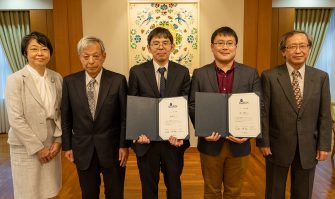
Inamori Research Institute for Science (InaRIS) Fellowship Program is a research grant program that allows researchers to pursue challenging projects over a 10-year period. The Advisory Board Meeting of InaRIS Fellowship Program was held on October 26 at the Inamori Foundation in Kyoto to have a discussion over the fellows’ research themes. InaRIS Fellowship Program...

The Inamori Foundation started to accept applications for the 2021 Inamori Research Grants and Inamori Research Institute for Science (InaRIS) Fellowship on May 21. The Inamori Research Grants Program was established in 1985 to foster diverse and creative research activities by providing opportunities to challenge many potential themes. This program has little scrutiny on how...
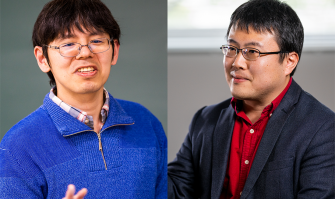
On April 10, 2020, the Inamori Foundation announced the 2020 fellows for the Inamori Research Institute for Science (InaRIS) Fellowship Program. As the first two InaRIS fellows for this new program, Tadashi Takayanagi (Professor, Yukawa Institute for Theoretical Physics, Kyoto University) and Atsushi Noguchi (Associate Professor, Graduate School of Art and Sciences, The University of...

The InaRIS Fellowship Program grants 10 million yen per year over 10 years (totaling 100 million yen) to researchers engaged in investigations into topics with high potential based on a grand vision, providing them with opportunities to indulge themselves in research activities and pursue the possibility of triggering a quantum leap in science. The keyword...

The Inamori Foundation starts to accept registration for the Inamori Grants and Inamori Research Institute for Science (InaRIS) Fellowship.
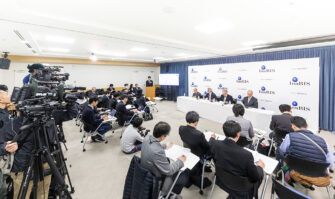
Today, the Inamori Foundation announced an establishment of the new grants program: “Inamori Research Institute for Science (InaRIS) Fellowship Program” in the press conference at Ministry of Education, Culture, Sports, Science and Technology.
Science & Engineering