-
About
- Kyoto Prize
-
Research Grants
-
Social Contributions
- Events
- News
About
Research Grants
Social Contributions

InaRIS Fellow (2020-2029)
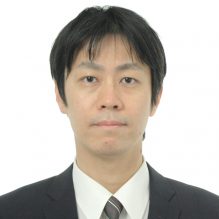
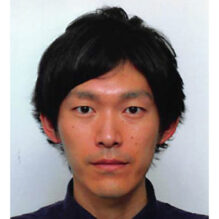
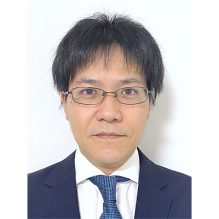
Professor,Yukawa Institute for Theoretical Physics, Kyoto University*Profile is at the time of the award.
2020InaRISScience & Engineering
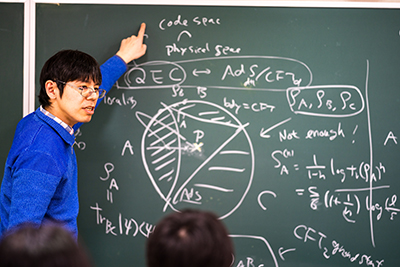
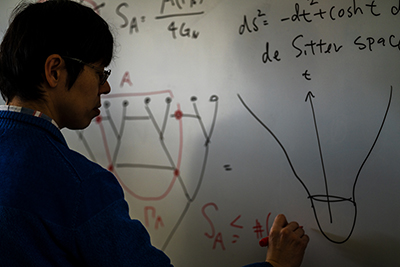

I decided to apply to this fellowship because it offers such generous support for a full decade. Because I’m involved in basic research, I must hunker down and tackle a very challenging problem over time. It’s incredibly gratifying to have such extended support. With financial backing from the InaRIS Fellowship Program, I intend to address the fundamental topic of the origin of our universe.
[Overview]
Several remarkable research results have been obtained toward understandings of the creation of the universe, based on quantum information theory. Most significantly, we found a quantum information-based understanding of the time coordinate in gravity by extending quantum entanglement to time-like setups. This reveals that in gauge-gravity correspondence and its extension to de Sitter spaces, the imaginary part of time-like entanglement entropy corresponds to the time-like geodesic length. It was thus demonstrated that the time axis in gravity emerges from the causal structure of the quantum many-body system. By applying this result, we explained the traversability of wormholes from a quantum information viewpoint.
[Details]
Takayanagi has published 20 papers since the previous interim review. In 2024, he became the second Japanese recipient of the ICTP Dirac Medal following Dr. Yoichiro Nambu (Nobel Laureate, 2008). Three research highlights from his research are selected and explained below:
① Time-like entanglement and the emergence of the time (Papers 17 and 15)
The Ryu-Takayanagi formula which computes the entanglement entropy in terms of the minimal area in gravitational spacetimes, while showing the emergence of spatial coordinates from quantum information, does not explain that of the time coordinate. To address this, Takayanagi et.al. extended the definition of entanglement entropy—which typically considers quantum correlations between spatially separated subsystems—to quantum correlations between temporally separated subsystems. This introduces a new quantity termed time-like entanglement entropy. This new quantum information quantity generally takes complex values. Using the gauge-gravity correspondence, Takayanagi et.al. showed that its imaginary part corresponds to the length of a time-like geodesic in anti-de Sitter space-time. Furthermore, a similar relation was extended to de Sitter spaces. This reveals that, within the gauge-gravity correspondence, the imaginary part of temporal entanglement entropy corresponds to the emergence of the time coordinate.
② Quantum information theoretic meaning of traversable wormholes (Paper 2)
Applying gauge-gravity correspondence to two quantum systems with quantum entanglement reveals that both theories correspond to universes connected by a wormhole. Though geometrically, this wormhole connects two worlds, observers cannot travel between them within a finite time. However, it is known that introducing interaction between the two systems makes this wormhole traversable. Takayanagi et.al. discovered that this phenomenon can be clearly understood quantum information-theoretically by utilizing the time-like entanglement introduced in ①. By defining a generalized density matrix for each quantum system, we found that when information can be sent from one side to the other, the imaginary part of the time-like entanglement entropy gets non-vanishing, and the density matrix becomes non-Hermitian. This achievement provides a quantum information theory understanding of causality in gravitational theory.
③ CFT duals of localized excited bulk states in dS/CFT (Paper 6)
We still do not understand well the gauge-gravity duality for de Sitter space (dS/CFT correspondence). The dS/CFT correspondence relates a d+1-dimensional de Sitter universe to a d-dimensional conformal field theory (CFT). Taking the 3-dimensional de Sitter universe (d=2) as an example, Takayanagi et.al. analyzed the state obtained by exciting a single point in the de Sitter universe and provided a complete description of this state as a quantum state based on CFTs by gauging the CPT symmetry.
[Key Publications]
[1] T. Takayanagi, ``Essay: Emergent Holographic Spacetime from Quantum Information,'' Phys. Rev. Lett. 34 (2025) no.24, 240001.
[2★] T. Kawamoto, R. Maeda, N. Nakamura and T. Takayanagi, ``Traversable AdS wormhole via non-local double trace or Janus deformation,'' JHEP 04 (2025), 086.
[3] K. Fujiki, H. Kanda, M. Kohara and T. Takayanagi, ``Brane cosmology from AdS/BCFT,'' JHEP 03 (2025), 135.
[4] P. Caputa, B. Chen, T. Takayanagi and T. Tsuda, ``Thermal pseudo-entropy,'' JHEP 01 (2025), 003.
[5] P. X. Hao, T. Kawamoto, S. M. Ruan and T. Takayanagi, ``Non-extremal island in de Sitter gravity,'' JHEP 03 (2025), 004.
[6★] K. Doi, N. Ogawa, K. Shinmyo, Y. k. Suzuki and T. Takayanagi, ``Probing de Sitter space using CFT states,'' JHEP 02 (2025), 093.
[7] J. Harper, H. Kanda, T. Takayanagi and K. Tasuki, ``g Theorem from Strong Subadditivity,'' Phys. Rev. Lett. 133 (2024) no.3, 031501.
[8] J. Harper, T. Takayanagi and T. Tsuda, ``Multi-entropy at low Renyi index in 2d CFTs,'' SciPost Phys. 16 (2024) no.5, 125.
[9] H. Kanda, T. Kawamoto, Y. k. Suzuki, T. Takayanagi, K. Tasuki and Z. Wei,` `Entanglement phase transition in holographic pseudo entropy,'' JHEP 03 (2024) 060.
[10] K. Shinmyo, T. Takayanagi and K. Tasuki, ``Pseudo entropy under joining local quenches,'' JHEP 02 (2024), 111.
[11] K. Okunishi and T. Takayanagi, ``Statistical mechanics approach to the holographic renormalization group: Bethe lattice Ising model and p-adic AdS/CFT,'' PTEP 2024 (2024) no.1, 013A03.
[12] A. J. Parzygnat, T. Takayanagi, Y. Taki and Z. Wei, ``SVD entanglement entropy,'' JHEP 12 (2023), 123.
[13] T. Kawamoto, S. M. Ruan, Y. k. Suzuki and T. Takayanagi, ``A half de Sitter holography,'' JHEP 10 (2023), 137.
[14] T. Kawamoto, S. Ruan and T. Takayanagi,``Gluing AdS/CFT,' 'JHEP 07 (2023) 080.
[15★] K. Doi, J. Harper, A. Mollabashi, T. Takayanagi and Y. Taki, ``Timelike entanglement entropy,'' JHEP 05 (2023) 052.
[16] H. Kanda, M. Sato, Y. k. Suzuki, T. Takayanagi and Z. Wei, ``AdS/BCFT with brane-localized scalar field,'' JHEP 03 (2023), 105.
[17★] K. Doi, J. Harper, A. Mollabashi, T. Takayanagi and Y. Taki, ``Pseudoentropy in dS/CFT and Timelike Entanglement Entropy,'' Phys. Rev. Lett. 130 (2023) no.3, 031601.
[18] T. Takayanagi and T. Tsuda, ``Free fermion cyclic/symmetric orbifold CFTs and entanglement entropy,'' JHEP 12 (2022) 004.
[19] N. Ogawa, T. Takayanagi, T. Tsuda and T. Waki, ``Wedge holography in flat space and celestial holography,'' Phys. Rev. D 107 (2023) no.2, 026001.
[20] K. Izumi, T. Shiromizu, K. Suzuki, T. Takayanagi and N. Tanahashi, ``Brane dynamics of holographic BCFTs,'' JHEP10 (2022) 050.
While the conventional gauge/gravity correspondence is applicable only for a universe with a negative cosmological constant, we have found a gauge/gravity correspondence, with a positive cosmological constant like the real universe for 3-dimensional spacetime. By introducing a new quantum information quantity called "pseudo-entropy," we succeeded in describing gravitational spaces, which depend on imaginary time in the gauge-gravity correspondence, from the viewpoint of quantum information. Furthermore, we discovered "wedge holography," in which a gravitational theory placed in a wedge-shaped universe corresponds to a quantum field theory localized at its tip. Using related methods, we constructed a model describing the evaporating black holes and derived the Page curve which implies that the evaporation process is a unitary.
Below we describe the following four highlights of my research achievements so far: (1) Gauge/gravity correspondence of the three dimensional de Sitter universe, (2) Gauge/gravity correspondence and pseudo-entropy, (3) Wedge holography, and (4) Moving mirror models and Page curves.
(1) Gauge gravity correspondence in a 3-D dodged-jitter universe
The gauge/gravity correspondence, also called the AdS/CFT correspondence, is the correspondence between the d+1-dimensional anti-de Sitter (AdS) universe and the d-dimensional conformal field theory (a special case of quantum field theory with scale symmetry, called CFT). This makes it possible to understand the problem of quantum gravity theory, a difficult problem in theoretical physics, by connecting it to a theory of quantum many-body systems that does not include gravity. However, the anti-de Sitter universe has a negative cosmological constant, while the real universe is considered to be a de Sitter universe with a positive value based on observations and other factors. Therefore, the generalization of the gauge-gravity correspondence to the de Sitter universe (called dS/CFT correspondence) is an extremely important issue. Till now, little progress has been made because the corresponding conformal field theory is not known. However, in this work, we have identified a conformal field theory that is equivalent to a 3-dimensional de Sitter universe, by utilizing the correspondence between 3-dimensional gravity theory and Chern-Simons gauge theory, and the relationship between Chern-Simons theory and a conformal field theory called the 2-dimensional WZW model. This is given by the conformal field theory obtained by taking the parameter called the level of the SU(2)WZW model as a complex number, and it is confirmed that the partition function of the 3-dimensional de Sitter universe predicted from the conformal field theory and that from the gravity theory perfectly agree. This result was published in Physical Review Letter and was selected as Editor's Suggestion. In addition, it was featured in a Viewpoint article in Physics, the outreach journal of the American Physical Society.
(2) Gage-Gravity Correspondence and Pseudo-Entropy
In the gauge-gravity correspondence, the entanglement entropy of conformal field theories is calculated by the entanglement entropy of conformal field theories. As discovered by this fellow in 2006. This idea has been a recent trend in string theory. In collaboration with Yoshifumi Nakata, a researcher of quantum information theory, and others, the Fellow has found that a generalization of entanglement entropy, called "pseudo-entropy," is equal to the area of the minimal surface in a more general universe that incorporates the time evolution of imaginary time. We also gave an operational interpretation that for a certain class of quantum states, the pseudo-entropy is equal to the amount of entanglement entropy that can be extracted from the intermediate states between the initial and final states. In a subsequent study, we found that pseudo-entropy acts as an order parameter in classifying the quantum phases of the quantum Ising model, and his results were published in Physical Review Letter.
(3) Wedge holography
The gauge-gravity correspondence is a correspondence in which the gravity theory in the anti-de Sitter universe is equivalent to a conformal field theory in a space-time space one dimension lower than the anti-de Sitter universe. The fellow found that the gravity theory in the wedge-shaped region is equivalent to the conformal field theory in a two-dimensional lower spacetime corresponding to the tip of the wedge. Free energy, correlation functions, entanglement, and entropy are shown to coincide with each other in this correspondence. This result was published in Physical Review D and was selected as Editor's suggestion.
(4) Moving mirror model and page curves
The moving mirror model is a model of quantum field theory with a time-dependent boundary, and it is known that Hawking radiation from a black hole can be described if the mirror trajectory is chosen appropriately. When a black hole evaporates with Hawking radiation, it becomes seemingly mixed after evaporation, and in the time evolution, the unitarity, which is the basis of quantum theory, appears to be violated. This is the information loss problem of black holes. To avoid this problem, the entanglement entropy of radiation must follow a special profile called the Page curve. We analyzed a two-dimensional moving mirror model using conformal field theory, and succeeded to calculate the time evolution of entanglement entropy analytically. Using this method, we analytically showed the time evolution of entanglement entropy follows an ideal Page curve. Although this model look like a quantum field theory without gravity, it can be regarded as a system where a conformal field theory interacts with an evaporating black hole by partially using the gauge/gravity correspondence. Therefore, the above result provides evidence that unitarity cannot be violated by the evaporation of a black hole. This work was published in Physical Review Letter.
One of the primary concerns of theoretical physics is to gain complete understanding of the physical principles of gravity at micro-level, that is, to elucidate the quantum gravity theory. A holographic derivation of entanglement entropy published in 2006 by Dr. Tadashi Takayanagi and Dr. Shinsei Ryu (Ryu–Takayanagi formula) has been one of the most important breakthrough discoveries since Dr. Juan Maldacena proposed AdS/CFT (anti-de-Sitter/conformal field theory) correspondence in 1997. So significant was their derivation that it changed the whole surface of the research trends in this field. In an interview conducted after receiving the 2014 Kyoto Prize, Dr. Edward Witten cited the Ryu–Takayanagi formula as the first on the list of “highlights in the past fourteen years.” Owing to its microscopic explanations based on AdS/CFT correspondence, the Ryu–Takayanagi formula has secured a critical position in theoretical physics.
For 14 years since announcing it, Dr. Takayanagi has continuously evolved the Ryu–Takayanagi formula to make leading contributions to the theoretical elucidation of the holographic principle and its application. Dr. Takayanagi and Dr. Matthew Headrick, for example, discovered that a strongly subadditive inequality of von Neumann entropy corresponds to a triangle inequality of the minimum surface, a geometric characteristic of the Ryu–Takayanagi formula. Revealing that the profound nature of entropy is reflected in a geometric structure of gravity theory, this discovery has significantly catalyzed the subsequent development in this field. Furthermore, over the past several years, it has become clear that quantum error correction codes of the quantum information theory are playing important roles in the microscopic mechanism of the holographic principle. The Ryu–Takayanagi formula plays an essential role in the elucidation of this mechanism as well.
The research topic that Dr. Takayanagi has proposed aims to further advance the novel idea of a close relationship between “quantum information” and the “quantum gravity theory,” which has become widespread after the publication of the Ryu–Takayanagi formula, and to bring about a breakthrough in the elucidation of the quantum gravity theory, understanding of which is still in the early stages. Some of the relevant and recent research findings by Dr. Takayanagi include: “entanglement of purification” (an amount of entanglement entropy extended to its mixed state) is equal to the cross-section of a certain wormhole in AdS/CFT correspondence, and that, when calculating the path integral of the conformal field theory by discretizing it, geometric features of anti-de Sitter space (AdS) appear by themselves if the most efficient discretization process is required. It is expected that a new phase of research will be developed based on these findings.
The series of research efforts by Dr. Takayanagi, which have resulted in the discovery of an entanglement entropy formula in the holographic principle and its subsequent progress, have marked fundamental achievements in the quantum gravity theory and superstring theory. His research also facilitates collaboration between the condensed matter theory and quantum information theory. In addition to these impressive fruits of research, Dr. Takayanagi is an excellent academic advisor, under whose tutelage numerous young researchers have been produced. Dr. Takayanagi is a world-leading researcher of superstring theory and, with support from the InaRIS Fellowship Program, is expected to be a driving force for theoretical physics research in Japan over the next decade.
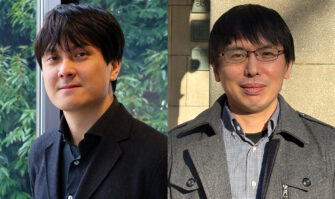
The Inamori Foundation announced the 2026 fellows for the Inamori Research Institute for Science (InaRIS) Fellowship Program on March 13, 2026.

The Inamori Foundation announced the 2025 fellows for the Inamori Research Institute for Science (InaRIS) Fellowship Program on March 14, 2025.

The Inamori Foundation started to accept applications for the 2025 Inamori Research Institute for Science (InaRIS) Fellowship on May 20, 2024.

On April 20, the 2024 InaRIS Fellowship Award Ceremony was held at a hotel in Kyoto.

The Inamori Foundation announced the 2024 fellows for the Inamori Research Institute for Science (InaRIS) Fellowship Program on March 15, 2024. This year, we will welcome two new fellows, Hiroshi Suzuki (Professor, Graduate School of Medicine, Nagoya University) and Ayuko Hoshino (Professor, Research Center for Advanced Science and Technology, The University of Tokyo), who were...
The Inamori Foundation started to accept applications for the 2023 Inamori Research Institute for Science (InaRIS) Fellowship on May 23, 2022.
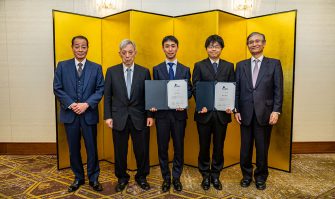
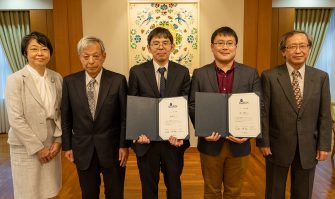
From the left: Executive Managing Director Shoichi Himono, InaRIS Chair Shigetada Nakanishi, the 2023 Fellows Yoshihiro Tanaka and Yasutaka Kamei, and Chair of Selection Committee Hiroto Yasuura On April 22, the InaRIS Fellowship Award Ceremony was held at a hotel in Kyoto. The 2023 InaRIS Fellows were recruited under the theme “Transcending the Future with...

The Inamori Foundation announced the 2023 fellows for the Inamori Research Institute for Science (InaRIS) Fellowship Program on March 17, 2023.

The Advisory Board Meeting of the Inamori Research Institute for Science (InaRIS) Fellowship Program was held at the Inamori Foundation in Kyoto, on October 4. There the committee members and the fellows had a discussion over their research themes. The InaRIS Fellowship Program was established in 2019 to encourage researchers to pursue their curiosity...
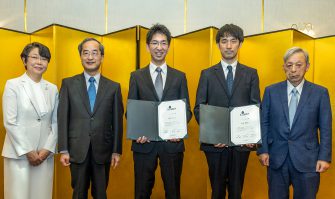
On April 23, InaRIS Fellowship Award Ceremony was held at a hotel in Kyoto for the first time since the establishment of the Fellowship in 2019.

The Inamori Foundation announced the 2022 fellows for the Inamori Research Institute for Science (InaRIS) Fellowship Program on March 18, 2022.

The Advisory Board Meeting of Inamori Research Institute for Science (InaRIS) Fellowship Program was held online on October 3 for the Committee members and the fellows to have a discussion over their research themes.

The Inamori Foundation started to accept applications for the 2022 Inamori Research Institute for Science (InaRIS) Fellowship on May 21, 2021.
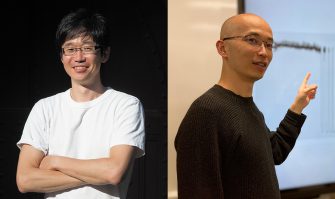
On March 19, 2021, the Inamori Foundation announced the two 2021 fellows for the Inamori Research Institute for Science (InaRIS) Fellowship Program, Hiroshi Nishimasu (Professor, Research Center for Advanced Science and Technology, The University of Tokyo) and Yoshifumi Yamaguchi (Professor, Institute of Low Temperature Science, Hokkaido University) were selected from 66 applicants. InaRIS Fellowship Program...
Inamori Research Institute for Science (InaRIS) Fellowship Program is a research grant program that allows researchers to pursue challenging projects over a 10-year period. The Advisory Board Meeting of InaRIS Fellowship Program was held on October 26 at the Inamori Foundation in Kyoto to have a discussion over the fellows’ research themes. InaRIS Fellowship Program...

The Inamori Foundation started to accept applications for the 2021 Inamori Research Grants and Inamori Research Institute for Science (InaRIS) Fellowship on May 21. The Inamori Research Grants Program was established in 1985 to foster diverse and creative research activities by providing opportunities to challenge many potential themes. This program has little scrutiny on how...

On April 10, 2020, the Inamori Foundation announced the 2020 fellows for the Inamori Research Institute for Science (InaRIS) Fellowship Program. As the first two InaRIS fellows for this new program, Tadashi Takayanagi (Professor, Yukawa Institute for Theoretical Physics, Kyoto University) and Atsushi Noguchi (Associate Professor, Graduate School of Art and Sciences, The University of...

The InaRIS Fellowship Program grants 10 million yen per year over 10 years (totaling 100 million yen) to researchers engaged in investigations into topics with high potential based on a grand vision, providing them with opportunities to indulge themselves in research activities and pursue the possibility of triggering a quantum leap in science. The keyword...

The Inamori Foundation starts to accept registration for the Inamori Grants and Inamori Research Institute for Science (InaRIS) Fellowship.
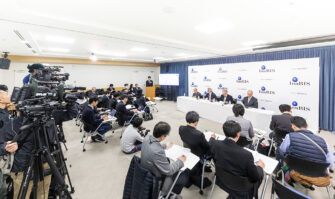
Today, the Inamori Foundation announced an establishment of the new grants program: “Inamori Research Institute for Science (InaRIS) Fellowship Program” in the press conference at Ministry of Education, Culture, Sports, Science and Technology.
Science & Engineering