-
About
- Kyoto Prize
-
Research Grants
-
Social Contributions
- Events
- News
About
Research Grants
Social Contributions

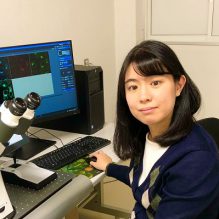
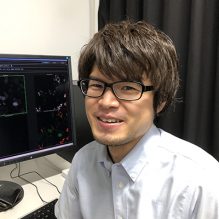
Assistant Professor, Institute of Medical, Pharmaceutical, and Health Sciences, Kanazawa University *Profile is at the time of the award.
2025Inamori Research GrantsBiology & Life sciences
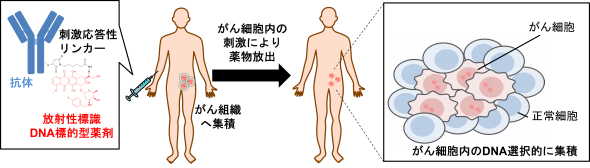
Nuclear medicine therapy is a cancer treatment that utilizes the cytotoxic effects of radiation emitted from radionuclides. Its high therapeutic efficacy has been gaining attention, particularly in cases such as patients with metastatic prostate cancer who have achieved complete remission after receiving a compound bound to an alpha-emitting radionuclide. However, awareness of this treatment remains low, and we aim to develop drugs that will contribute to its widespread adoption.
Cytotoxicity assays of doxorubicin (DOX) derivatives labeled with the Auger electron-emitting radionuclides I-125 and Br-77, as well as the α-particle-emitting radionuclide At-211, demonstrated that DOX derivatives with high nuclear translocation ability exhibited greater cytotoxicity for all radiohalogen-labeled compounds. In contrast, the At-211-labeled DOX derivative with low nuclear translocation ability also showed high cytotoxicity, suggesting that DNA-targeting strategies are effective for Auger electron emitters but not necessarily for α-particle emitters.
Biology & Life sciences